
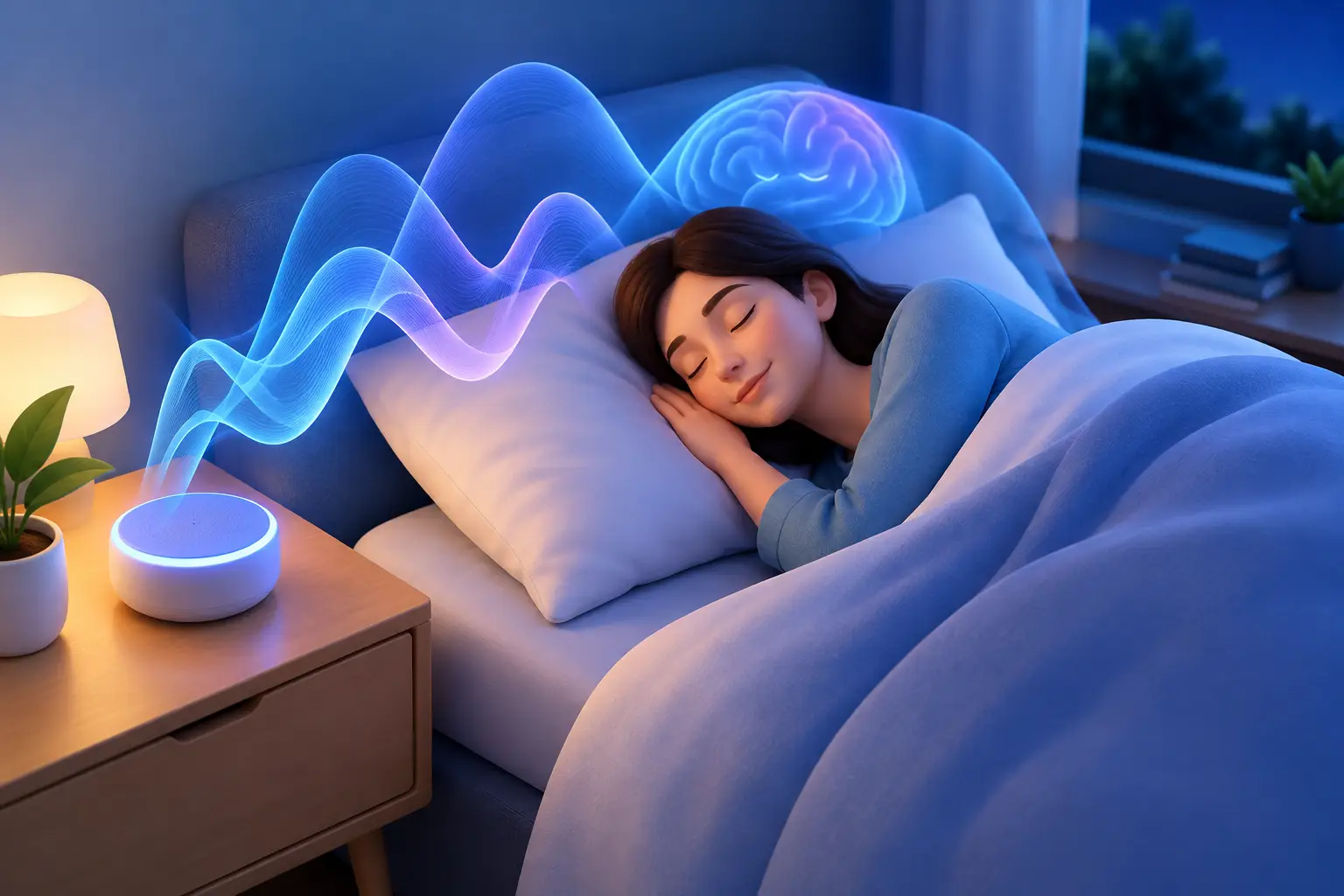
A racing mind does not need another complicated bedtime routine. It needs a clear signal that the day is over. Learning how to use sleep frequencies gives you a simple audio tool for creating that signal - one that can help you shift out of work mode, quiet mental noise, and make space for real rest.
Sleep frequencies are not a magic switch, and they are not a replacement for medical care when sleep problems are persistent or severe. Used well, though, frequency-based audio can become a powerful part of your wind-down ritual. The difference is not just pressing play. It is choosing the right track, using it at the right time, and giving your brain consistent conditions for sleep.
What Sleep Frequencies Are Designed to Do
The phrase "sleep frequencies" can describe several kinds of audio: calming tones, ambient soundscapes, isochronic tones, and binaural beats. Binaural beats work by playing slightly different tones in each ear. Your brain perceives the difference between them as a rhythmic pulse, which may support a more relaxed mental state.
For sleep, the goal is not to force your brain into unconsciousness. The goal is to reduce the internal friction that keeps you alert: looping thoughts, stress carryover, overstimulation, and the urge to check one more message.
Many sleep-focused tracks are built around slower frequency ranges commonly associated with relaxed or sleepy states. Theta-range audio is often used for deep relaxation and the transition into sleep. Delta-focused audio is commonly used for deeper nighttime rest. Results vary by person, which is why your own response matters more than chasing a perfect number.
Think of the track as a cue. Over time, a consistent cue can tell your nervous system: the lights are low, the demands are done, and it is safe to power down.
How to Use Sleep Frequencies Before Bed
Start your track 20 to 45 minutes before you want to fall asleep. This window gives your mind time to come down rather than expecting audio to erase a full day of stimulation in two minutes.
If you are using binaural beats, wear stereo headphones because each ear needs to receive its own tone. Choose soft, comfortable headphones that will not bother you if you doze off. If sleeping in headphones feels uncomfortable or unsafe for you, use a speaker and choose a calming sleep track made for open-air listening instead. Traditional binaural effects may be less distinct through a speaker, but the ritual and relaxation value can still be useful.
Keep the volume low. You should be able to hear the audio without feeling surrounded by it. Loud sound does not create deeper sleep. It can keep your brain engaged, irritate your ears, or wake you when the track changes. Aim for a level that fades into the background within a few minutes.
Set a timer. A 30-, 45-, or 60-minute session is a practical place to begin. Some people prefer audio that runs through the night, but others sleep better when the sound ends after they have settled. Test both approaches instead of assuming more audio is always better.
Build a Routine Your Brain Recognizes
Frequency audio works best when it is part of a repeatable sequence. Your brain learns through repetition. When the same conditions show up night after night, the transition to sleep can start to feel easier before the track even begins.
Try a short shutdown routine: dim the room, put your phone on charge away from the bed, take care of your last practical task for the evening, then start your sleep audio. The routine does not need to be elaborate. It needs to be consistent enough that your brain stops treating bedtime as another work session.
If you often get into bed already overstimulated, begin the track before you are under the covers. Listen while stretching lightly, reading a few pages of something non-demanding, or sitting in low light. This separates sleep frequencies from the frustration of lying awake and waiting to fall asleep.
Hertzbox Pro users can make this even simpler by choosing a dedicated sleep track and reserving it for nighttime only. Do not use the same audio during email, studying, or scrolling. Give it one job: helping your brain transition toward rest.
Choose the Right Type of Sleep Track
The best sleep frequency is the one you can listen to without monitoring it. If you find yourself analyzing every pulse, tone, or background layer, the track may be too stimulating for bedtime.
Start with a slower, softer track designed for relaxation or sleep onset. If you struggle most with anxious thinking at the beginning of the night, a theta-oriented relaxation session may be a better fit than a very low, heavy-feeling delta track. If you wake frequently or want a more immersive bedtime sound, you may prefer a longer, gentler sleep session.
Personal preference matters. Some people relax with rain, ocean sounds, or soft ambient textures layered with frequencies. Others want minimal sound with no nature effects or music. Neither approach is automatically better. The useful question is simple: does this audio lower your sense of effort, or does it give your attention something else to manage?
Avoid tracks with sudden volume changes, lyrics, dramatic transitions, or energetic rhythms. Those elements can be effective for focus or motivation, but they work against a quiet sleep environment.
Give It Time, Then Adjust One Variable
Do not judge a new sleep-frequency routine after one difficult night. Sleep is affected by stress, caffeine, alcohol, temperature, schedule changes, illness, and dozens of other variables. Give a track three to seven nights before deciding whether it belongs in your routine.
Keep your experiment simple. Use the same track, at roughly the same time, with the same volume for several nights. Notice whether you feel calmer before sleep, how long it seems to take you to drift off, and whether you wake up feeling more rested.
If it is not working, change one thing at a time. Try a different frequency style, shorten the timer, lower the volume, or start earlier. Switching everything at once makes it impossible to know what helped.
A short note in your phone or journal can reveal patterns quickly. You do not need to track every minute of sleep. A basic rating for pre-bed stress, ease of falling asleep, and morning energy is enough to make smarter adjustments.
Common Mistakes That Keep Sleep Audio From Helping
The biggest mistake is treating sleep frequencies like a rescue tool after hours of bright screens, late work, and mental overload. Audio can support a wind-down, but it cannot fully cancel an environment built for alertness.
Another mistake is using a focus track at night. Higher-energy binaural beats or rhythmic audio can be useful during demanding work, but bedtime calls for a different target. Your sleep track should feel like a release, not a performance enhancer.
Also avoid turning the process into another optimization project. You do not need to search endlessly for the one perfect hertz value. If a track feels calm, comfortable, and repeatable, it is doing its job. Sleep improves when pressure drops.
Finally, do not use headphones while driving, walking in unsafe areas, or doing anything that requires full awareness. If you have tinnitus, sound sensitivity, a neurological condition, or notice that audio triggers headaches or discomfort, stop using it and speak with a qualified healthcare professional. For ongoing insomnia, severe daytime fatigue, loud snoring, or breathing pauses during sleep, seek clinical guidance rather than relying on audio alone.
Make Sleep Frequencies Part of a Stronger Sleep Environment
Frequency audio has more impact when the rest of your environment supports the same outcome. A cool, dark room, a predictable bedtime, and less bright-screen exposure near sleep all reduce competing signals.
Caffeine timing matters, too. If you are listening to a calming track while your system is still stimulated from a late afternoon energy drink or several evening coffees, the audio is working uphill. The same goes for alcohol: it can make you feel sleepy at first while still disrupting sleep quality later in the night.
Use sleep frequencies as the final layer of your routine, not the only layer. That is where they become practical. You are not asking a sound file to solve every sleep challenge. You are using it to reinforce the conditions your mind needs to let go.
Tonight, choose one calming track, set a low volume and a 45-minute timer, then let repetition do the heavy lifting. The goal is not to chase sleep. It is to give your brain a signal it learns to trust.