
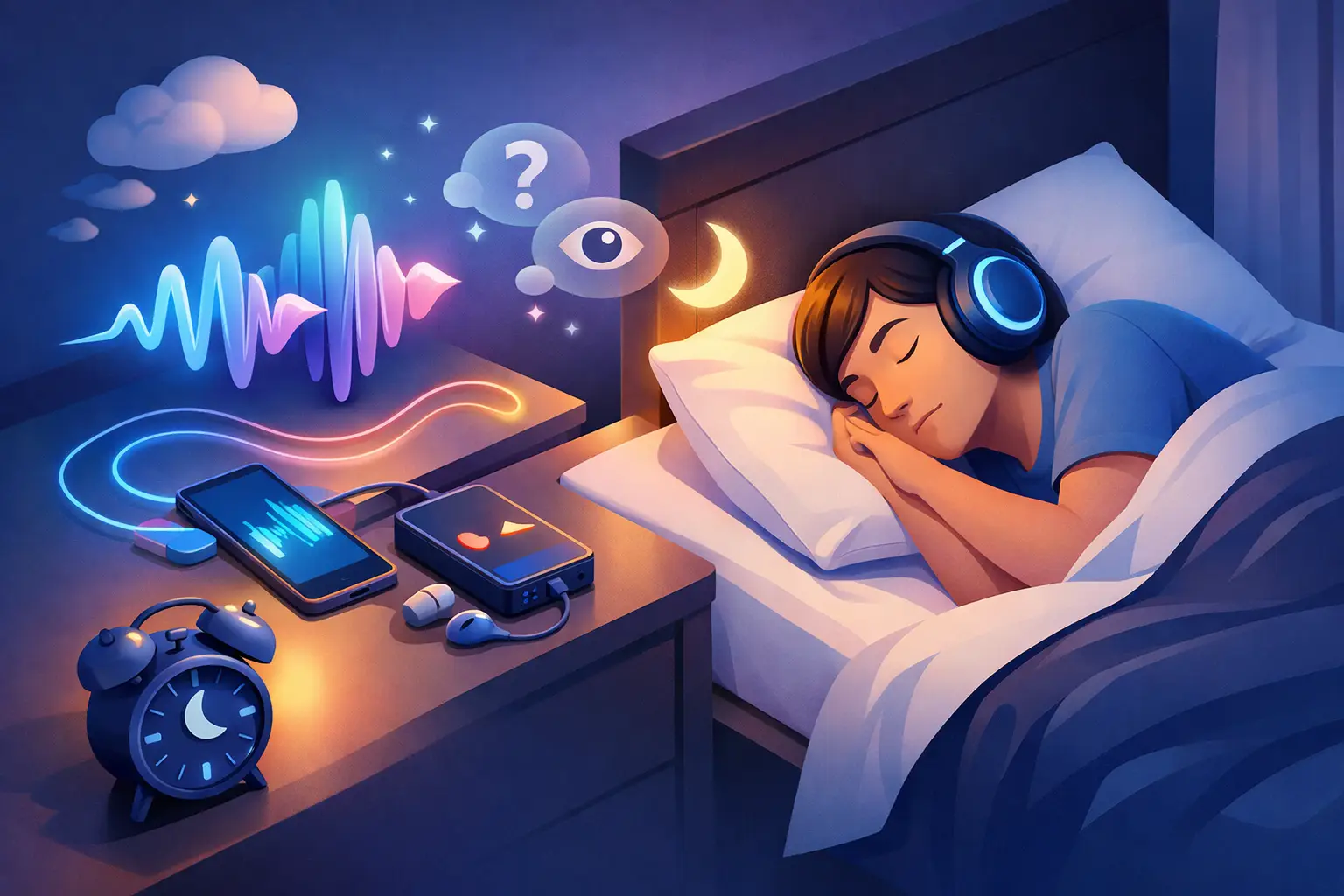
Some nights your body is tired, but your mind keeps running at full speed. That is the exact moment people start looking for tools that can shift their state fast - without adding another pill, another complicated ritual, or another hour of screen time. That is why binaural beats for insomnia keep getting attention. They promise something simple and appealing: use sound to help your brain slow down enough to sleep.
That promise is real enough to explore, but it needs a clear explanation. Binaural beats are not magic, and they are not a guaranteed fix for chronic sleep problems. What they can be is a useful audio tool for people whose insomnia is tied to mental overactivity, stress, tension, or an inability to transition out of alert mode.
What binaural beats for insomnia are actually doing
Binaural beats happen when each ear hears a slightly different tone. Your brain processes the difference between those tones as a perceived rhythmic pulse. The idea is that this pulse may encourage the brain to move toward a different state, depending on the frequency range being used.
For sleep, the goal is not stimulation. It is downshifting. Many sleep-oriented tracks are built to support slower brainwave states associated with relaxation, drowsiness, and deeper rest. In plain terms, they are designed to help reduce the mental friction that keeps you awake.
That matters because insomnia is not always about a lack of tiredness. Often, it is about a mismatch. Your body wants rest, but your brain is still acting like it has unfinished business. A well-made binaural beat track can give that transition a direction.
Do binaural beats for insomnia work for everyone?
No. And that is the honest answer.
Some people feel the effect quickly. They report a quieter mind, slower thoughts, and an easier slide into sleep. Others notice only a mild calming effect. Some feel nothing at all, especially if they are distracted, uncomfortable, skeptical to the point of hyper-monitoring, or dealing with more complex sleep issues.
Insomnia is a broad label. For one person, it means trouble falling asleep after stressful workdays. For another, it means waking at 3 a.m. every night with anxiety. For someone else, it may be tied to caffeine, depression, pain, hormone shifts, sleep apnea, medication, or an irregular schedule. Binaural beats may help with the state component of sleep, but they do not solve every underlying cause.
That trade-off is worth respecting. If your insomnia is mild to moderate and fueled by racing thoughts or difficulty winding down, audio may be a strong fit. If your sleep problems are severe, long-lasting, or paired with symptoms like gasping, heavy snoring, panic, or extreme daytime fatigue, sound alone is probably not enough.
Why sound can help when your brain will not switch off
The strongest case for binaural beats is not that they knock you out. It is that they can make sleep more available.
A lot of adults stay stuck in performance mode long after the day ends. Work messages, decision fatigue, stress, and overstimulation keep the nervous system leaning toward alertness. Then bedtime arrives, and suddenly you are expected to fall asleep on command. That is where many people fail. Not because they are broken, but because they never truly powered down.
Audio helps by creating a controlled input. Instead of letting your mind bounce between tomorrow's tasks, old conversations, and low-level anxiety, you give it one job: follow the sound and settle. When the track is designed for calming rather than stimulation, that can become a bridge between mental activity and sleep readiness.
This is one reason performance-minded users are drawn to binaural beats. They do not want another vague wellness habit. They want a practical tool that shifts their internal state with minimal effort. Used the right way, that is exactly where binaural beats can fit.
How to use binaural beats for insomnia the smart way
The biggest mistake is treating them like background noise while doing five other things. If you want results, use them intentionally.
Start 20 to 45 minutes before you want to sleep. Give yourself a short runway instead of waiting until frustration has already taken over. Put on headphones, since binaural beats rely on separate tones reaching each ear. Keep the volume low. Louder is not better. In fact, sound that is too strong can keep you more alert.
Lie down or sit in dim light. Stop scrolling. Do not pair the track with emails, TV, or stimulating content. The point is to reduce inputs, not stack them. Let the audio be the main signal your brain follows.
Consistency matters more than intensity. One night may feel subtle. A week of repeated use often tells you much more than a single session. Your brain and body learn patterns. If the same sound becomes part of your shutdown routine, the effect can get stronger because your system starts associating it with rest.
What kind of results you should expect
The best results are usually simple, not dramatic.
You may notice that your thoughts feel less sharp around the edges. Your breathing may deepen. Your body may stop feeling like it is bracing. Sleep may come a little faster. If you wake in the night, returning to sleep may feel less difficult. Those are meaningful outcomes, even if they do not feel flashy.
What you should not expect is instant sedation every time. If a track helps you move from wired to calm, it is doing useful work. That shift alone can change how bedtime feels. Instead of struggling against your own mind, you create conditions where sleep has a chance.
That distinction matters. Audio is a state-management tool. It supports sleep. It does not force it.
When binaural beats help most
Binaural beats for insomnia tend to work best for people who are mentally overstimulated, stress-loaded, or habitually activated at night. If you often feel tired but mentally noisy, you are a strong candidate.
They can also be helpful for people who want a non-invasive routine. No supplements to time. No complicated technique to learn. Just a repeatable audio cue that fits into real life.
That said, they are less likely to be enough on their own if your sleep environment is chaotic, your schedule changes constantly, or your evenings are full of bright screens, alcohol, and late caffeine. Sound can help, but it works better when the rest of your routine is not fighting it.
Common reasons people say binaural beats did not work
Sometimes the problem is not the technology. It is the setup.
A poor-quality track can ruin the experience. So can using speakers instead of headphones. Some people choose frequencies meant for focus or energy by mistake and then wonder why they feel more awake. Others quit after one try, or they listen while scrolling social media, which defeats the entire purpose.
There is also the issue of expectations. If you approach the session asking every two minutes whether it is working, you keep your brain in evaluation mode. Sleep does not respond well to performance pressure. The more useful mindset is this: create the conditions, let the audio do its job, and stop trying to force a result.
That is one reason specialized libraries matter. With a focused platform like Hertzbox Pro, users are not left guessing which sound to try or whether a track was built with the right outcome in mind. That clarity saves time and lowers friction.
Should you try binaural beats for insomnia?
If your nights are getting hijacked by mental noise, stress, or the inability to shift out of go mode, yes, they are worth trying. The barrier is low, the method is simple, and the upside is meaningful. Better sleep changes everything - mood, focus, recovery, patience, and cognitive performance.
Just stay realistic. Binaural beats are not a cure-all. They are a tool. A strong one for the right person, especially when your main issue is not lack of exhaustion but lack of mental quiet.
The real win is not chasing perfect sleep. It is building a repeatable way to guide your brain out of overdrive when the day is done. If sound helps you make that shift, it is not a small upgrade. It is a better night, and often a better next day too.