You do not need another app full of vague promises and background noise. A mental performance audio library should do one thing well: help you shift your state on purpose. When your brain feels scattered, flat, overstimulated, or stuck, the right audio can give you a faster path back to focus, calm, and usable energy. Start Listening
That is why this category matters. Most people are not looking for more content. They are looking for better output. They want to think clearly before a demanding meeting, study longer without mental drag, settle down after stress, or stop wasting an hour trying to get into the zone. A strong audio library is not entertainment. It is a practical mental tool.
What a mental performance audio library should actually do
A real mental performance audio library is built around outcomes, not filler. The point is not to scroll through hundreds of tracks with poetic names and hope one feels right. The point is to have targeted audio for specific mental states so you can choose what you need and use it quickly.
That means the library should support moments like deep work, creative concentration, emotional decompression, sleep prep, and recovery after cognitive overload. If every track feels interchangeable, the library is probably too broad to be useful. Mental performance improves when audio is intentional.
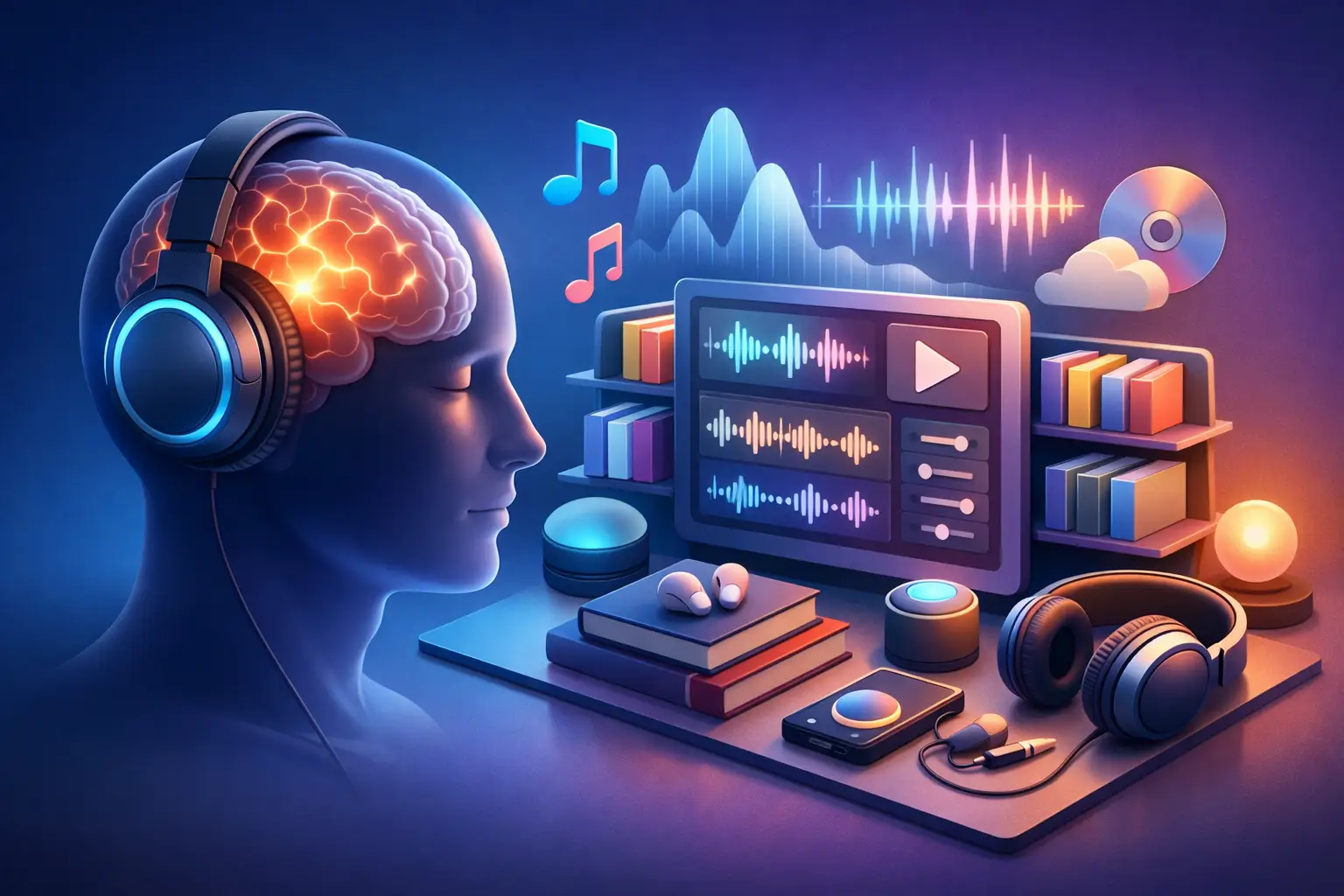
Binaural beat libraries stand out here because they are designed around brain-state support rather than general relaxation. That does not mean every track works the same way for every person. It means the collection has a clearer job. Instead of asking you to meditate for an hour or learn a complicated routine, it gives you ready-to-use audio built for specific internal shifts.
Why audio works for mental performance
Mental performance is not just about discipline. It is also about state management. You can have the right plan and still underperform if your mind is agitated, tired, foggy, or emotionally loaded. Audio helps because it can change the environment inside your head without asking for much effort.
That is the real advantage. You press play, put on headphones, and let the track do part of the work. For busy adults, that matters. Students, founders, remote workers, and high-output professionals do not always have time for a long reset ritual. They need tools that fit between tasks and still move the needle.
There is also a lower-friction quality to audio compared with many self-improvement systems. You do not need equipment, coaching, or a steep learning curve. You need the right track at the right time, used consistently enough to become part of your rhythm.
The difference between useful and random
A lot of audio products fail because they make you do too much guesswork. One track says focus. Another says clarity. Another says flow. But what is the actual difference, and when should you use each one? If the answer is not obvious, people stop using the library.
A useful collection feels organized around real life. It helps you identify whether you need alertness, calm concentration, emotional reset, or sleep support. That clarity matters because different mental problems need different inputs. If you are anxious, a highly energizing track may make things worse. If you are mentally dull, ultra-calming audio may not help you work.
This is where a specialized library has an edge over general wellness platforms. Broad meditation apps often try to be everything for everyone. A focused performance library is better when your goal is direct state change with less browsing and less noise.
What to look for in a mental performance audio library
Start with range. Not endless range, but useful range. You want enough variety to match different needs across the day: focus, stress reduction, mood support, recovery, and rest. A small library can work if it is sharply designed, but too few options can leave gaps.
Next, look for specificity. Tracks should feel purpose-built. If every description sounds interchangeable, that is a warning sign. People do not struggle with only one state. They deal with procrastination, cognitive fatigue, overstimulation, low motivation, and emotional spillover from work or life. The library should reflect that.
Ease of use matters too. If it takes too much thought to choose a track, you add friction at the exact moment you need relief. A good system makes selection simple and repeatable. You should be able to say, I need to focus for 45 minutes, or I need to come down after a stressful call, and know where to go.
Finally, pay attention to whether the product feels built for performance or just packaged as wellness. There is nothing wrong with relaxation, but performance-oriented users often need more than ambience. They want audio that supports output, recovery, and consistency.
Where binaural beats fit in
Binaural beats appeal to people who want a more targeted approach to mental optimization. The idea is straightforward: use carefully designed audio patterns to support different internal states. For many users, that makes the experience feel more active and intentional than simply playing calming music in the background.
The trade-off is that expectations need to stay realistic. A track will not replace sleep, therapy, medical care, or real work habits. If you are severely burned out, audio alone is not the answer. But if your main challenge is getting your brain into a better state faster and more reliably, binaural beats can become a strong part of the system.
That is where a product like Hertzbox Pro makes sense. A structured library of 91 binaural beats gives users something more useful than a handful of generic focus tracks. It creates room for precision, which is what performance-minded users usually want.
How to use a library without overcomplicating it
The best results usually come from using audio as a routine cue, not as a last-minute rescue every once in a while. If you only reach for it when your day is already derailed, you may still get value, but consistency tends to build stronger associations.
For example, you might use one category for morning concentration, another for afternoon reset, and another at night when your mind will not power down. Over time, your brain starts to connect those tracks with those states. That makes it easier to enter them with less resistance.
It also helps to avoid using one favorite track for everything. That sounds efficient, but it can blur the purpose. A sharper system works better. Use energizing audio for output. Use calming audio for decompression. Use sleep-oriented tracks for recovery. Match the tool to the moment.
Headphones are usually important, especially with binaural beats. Environment matters too. You do not need a perfect setup, but expecting deep focus while checking messages every two minutes is unrealistic. Audio works best when it is part of a clean work block or a clear recovery window.
What results people usually notice first
The first benefit is often not dramatic brilliance. It is less friction. Starting work feels easier. Settling after stress takes less time. Your thoughts feel less noisy. That may sound modest, but it compounds fast.
Once that happens, people often notice better consistency. They are not relying only on motivation anymore. They have a repeatable way to support the state they want. That can lead to longer concentration windows, fewer unproductive transitions, and better emotional control during a demanding day.
Sleep support can also have a quiet but major effect. Better recovery tends to improve focus, patience, and mood the next day. In that sense, a mental performance library is not only about peak output. It is also about reducing the mental static that keeps performance unstable.
Who gets the most value from this kind of tool
People with mentally demanding schedules usually get the clearest payoff. That includes professionals switching between high-focus tasks, students balancing long study sessions, entrepreneurs carrying constant cognitive load, and wellness-minded users who want non-invasive support.
It is especially useful for people who know their problem is not a lack of ambition. They want to perform, but their state gets in the way. They feel mentally noisy, emotionally overactivated, or unable to lock in. Audio can help bridge that gap because it is fast, accessible, and easy to repeat.
If you want one simple standard, use this: a good library should help you become more intentional with your mind, not more dependent on novelty. The right tracks do not just sound good. They make your day easier to direct. And when a tool helps you think better, recover faster, and return to center on command, it earns a permanent place in your routine.