
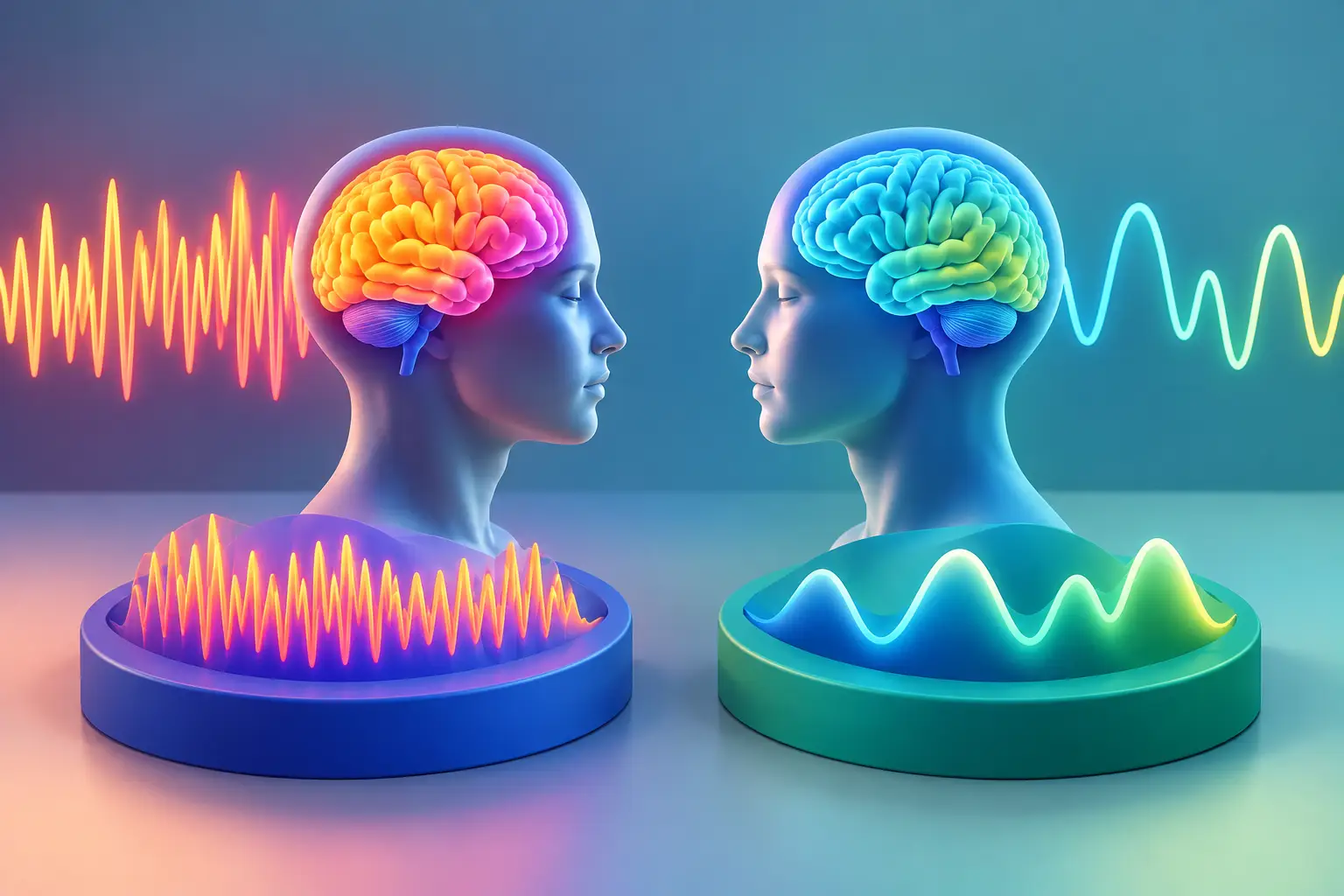
Your brain does not need the same soundtrack before a high-stakes presentation that it needs after a draining day. That is the real value of understanding gamma waves versus alpha waves. One pattern is associated with intense, integrated mental processing. The other is linked with relaxed alertness and a quieter internal state. Knowing the difference helps you choose audio with a purpose instead of pressing play and hoping for focus.
Brainwave audio is not a substitute for sleep, mental health care, medication, or professional medical advice. It can, however, be a practical ritual for creating the conditions that support the state you want to enter.
Gamma Waves Versus Alpha Waves: The Core Difference
Brainwaves are rhythmic patterns of electrical activity measured in the brain. They are commonly grouped by frequency, measured in hertz (Hz). Your brain produces multiple frequencies at once, rather than operating in a single, fixed mode. The categories are useful signals, not on-off switches.
Alpha waves typically fall around 8 to 12 Hz. They are often observed when you are awake but physically relaxed: eyes closed, resting quietly, meditating, or taking a mental pause between demands. Alpha is not sleep. It is the bridge between a busy, externally focused mind and a calmer, more inwardly settled one.
Gamma waves are much faster, commonly measured above 30 Hz. Research associates gamma activity with attention, perception, learning, memory integration, and processing information across different brain regions. Gamma is often discussed in connection with moments that require your brain to bind details into a coherent whole.
The simple distinction is this: alpha supports a calm, receptive baseline. Gamma is tied to high-speed, high-demand cognitive work. Neither is inherently better. The right choice depends on whether your biggest obstacle is mental noise or insufficient engagement.
When Alpha Is the Better Move
Alpha is the frequency range to consider when your mind feels crowded, tense, or overstimulated. You may still have work to do, but forcing harder focus is not the answer. First, you need to lower the internal friction that makes every task feel heavier than it is.
An alpha-oriented audio session can fit before meditation, journaling, creative work, breathwork, or a difficult conversation. It may also be useful when you need to step away from constant notifications and reset without taking a nap.
Think of alpha as preparation. A calmer nervous system gives you more room to make deliberate choices. If you tend to open your laptop already scattered, five to fifteen minutes of quiet, headphones-on listening can become a clean transition into your next block of work.
Alpha may also serve people who confuse anxiety with productivity. A racing mind can feel active, but activity is not always useful attention. Relaxed alertness often produces better decisions than frantic effort.
When Gamma May Fit Your Goal
Gamma-oriented audio is a more natural match for periods that demand active engagement. Use it as a cue for focused reading, complex problem-solving, studying, building, writing, or preparing for a mentally demanding task.
The goal is not to turn yourself into a machine or expect instant genius from a track. The more realistic goal is to create a consistent focus ritual. When the same sound, headphones, desk setup, and time block repeatedly signal deep work, your brain begins to recognize the pattern.
Gamma can be especially appealing when you are mentally awake but drifting between tabs, messages, and unfinished thoughts. Instead of reaching for more caffeine, try reducing interruptions and pairing a gamma-focused session with one clearly defined objective.
For example, do not sit down with the vague instruction to “work.” Choose a measurable target: outline three slides, solve ten practice problems, edit 800 words, or review one chapter. The audio supports the environment. The target directs the attention.
The Trade-Off: More Intensity Is Not Always More Productive
The biggest mistake in brainwave listening is treating faster frequencies as automatically superior. If you are exhausted, anxious, or carrying the residue of a stressful day, a high-intensity focus session can feel irritating rather than helpful. Your nervous system may need downshifting before it can concentrate.
This is where alpha earns its place. A short alpha session before a gamma-focused work block may be more effective than jumping straight into stimulation. Calm the noise first, then direct your energy.
The reverse is true, too. If you are calm but passive, alpha may make you feel too comfortable to start. Gamma may be the better cue when you need momentum, intellectual engagement, and a firm boundary around distraction.
Your response is personal. Sleep quality, stress level, the task in front of you, caffeine intake, and even the time of day can change what feels effective. Treat your listening practice as an experiment, not a test you can fail.
How Binaural Beats Fit Into the Picture
Binaural beats use slightly different tones in each ear. Your brain perceives the difference between those tones as a rhythmic pulse. For that reason, stereo headphones are essential for a binaural beat session.
People use binaural beats to support relaxation, meditation, concentration, and sleep routines. Research on their effects is still developing, and results vary by person, track design, listening context, and expectation. The strongest approach is practical: use the audio as part of a repeatable routine, then notice what changes in your ability to settle, begin, or stay with a task.
Do not listen while driving, operating machinery, or doing anything that requires full environmental awareness. Keep volume at a comfortable level. Louder does not mean more effective, and strained listening defeats the purpose.
Hertzbox Pro is built for this kind of intentional use, with targeted binaural beat sessions that let you choose an audio cue based on the state you want to support rather than relying on random background noise.
Build a Smarter Listening Routine
Start by matching the session to the moment. Use alpha when you need to decompress, regain emotional balance, or prepare for reflective work. Choose gamma when you are rested enough to engage and need a focused container for mentally demanding work.
Give each session a beginning and an end. For alpha, that might mean ten minutes before meditation or before opening your planner. For gamma, it could mean a 25-minute distraction-free sprint followed by a break. The structure matters because it teaches your brain what the sound means.
Track simple signals for a week: how quickly you start, how often you reach for your phone, whether your body feels tense, and whether you can recall what you worked on afterward. Avoid judging a track based on one session. Look for patterns across several uses.
If a frequency-focused session makes you feel agitated, headachy, or uncomfortable, stop and switch to quiet audio or silence. People with epilepsy, a seizure history, or a neurological condition should speak with a qualified clinician before using brainwave-oriented audio.
Choose the State Before You Choose the Sound
Gamma waves and alpha waves are not competing teams. They are tools for different moments. Alpha helps create space when stress, noise, and overstimulation are blocking you. Gamma supports the kind of engaged attention required when the task is complex and your mind is ready to meet it.
The real performance advantage comes from asking one direct question before you press play: do I need to settle down, or do I need to lock in? Choose the answer honestly, protect the next few minutes from distraction, and let your audio routine become a signal that your mind can trust.