
You put on headphones, press play, and hope your brain gets the message. That is the real question behind do binaural beats really work - not as a theory, but as a tool you can use when focus is slipping, stress is climbing, or your mind will not settle down.
The short answer is yes, binaural beats can work for some people and some goals. But they are not magic, and they are not a replacement for sleep, therapy, medication, or solid daily habits. They are better understood as a mental state support tool. Used well, they may help nudge your brain toward relaxation, concentration, or sleep readiness. Used with unrealistic expectations, they can feel underwhelming.
That distinction matters. If you expect instant transformation, you will probably miss the real value. If you use them like a precision audio tool for shaping your environment and internal state, the results can be much more noticeable.
Do binaural beats really work for focus and calm?
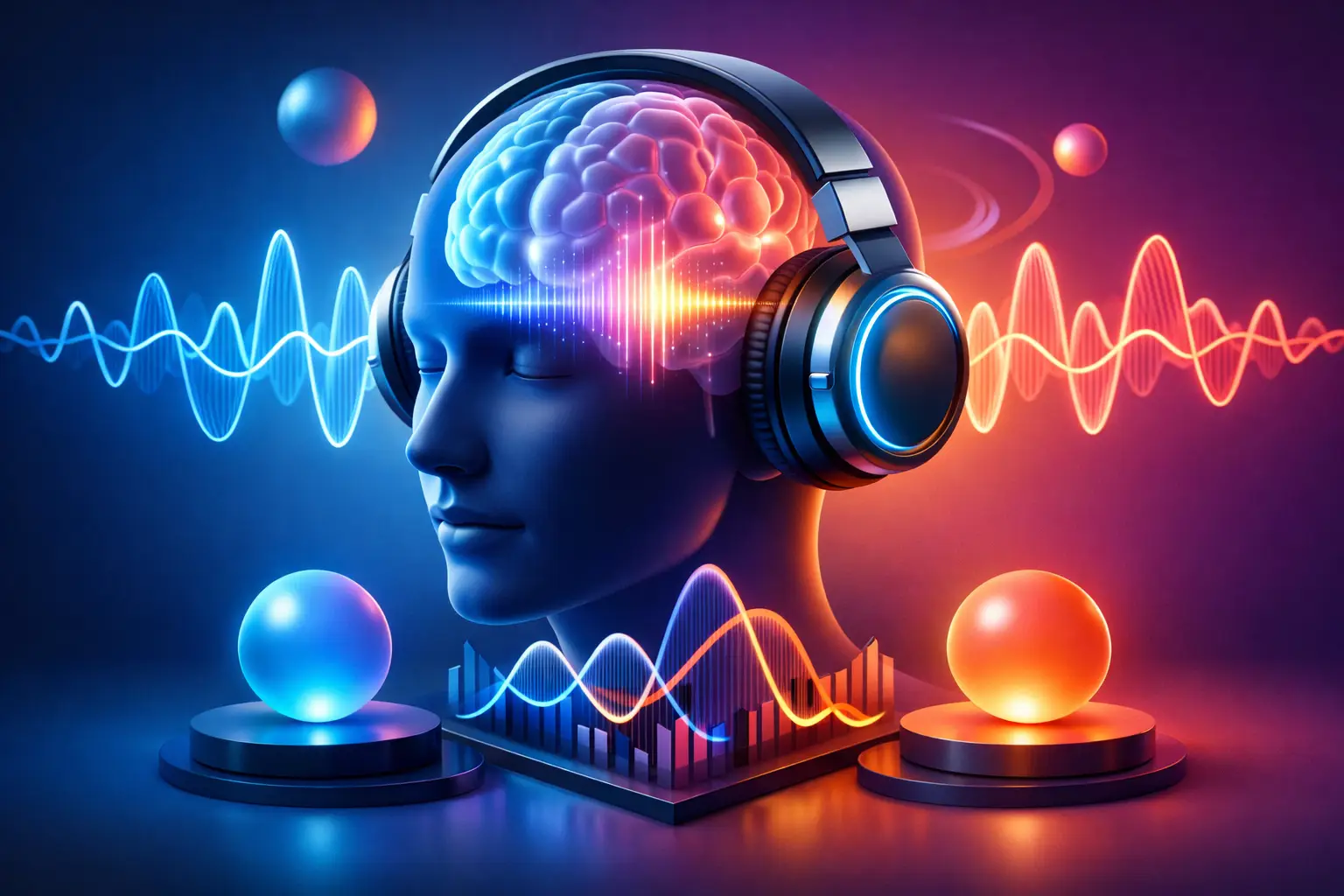
Binaural beats are created when each ear hears a slightly different tone. Your brain processes the difference between those tones as a kind of internal rhythmic pulse. That pulse is thought to encourage brain activity to sync, or entrain, toward a target frequency range associated with certain states such as relaxed alertness, concentration, or drowsiness.
That is the mechanism people point to, but the lived experience is what most users care about. Many people report that binaural beats help them settle faster, reduce mental noise, and stay with a task longer. For focus, they often work best when paired with a clear work block and minimal distractions. For calm, they tend to help by giving your mind something steady to lock onto instead of feeding anxious thought loops.
The catch is that results vary. Some people feel a shift in minutes. Others notice little at first and need repeated use before the effect becomes obvious. And some simply do not respond much at all. Brain chemistry, stress level, expectation, listening environment, and even the type of task you are doing can all shape the outcome.
What the science actually says
The research on binaural beats is promising in places, mixed in others, and nowhere near as absolute as marketing claims can make it sound.
Some studies suggest benefits for anxiety reduction, attention, mood, and pain perception. Other studies show small effects or inconsistent results. That does not mean binaural beats are fake. It means they sit in the same category as many wellness tools: useful for some use cases, less impressive for others, and highly dependent on how they are used.
One reason the science looks uneven is that studies do not always test the same thing. Different frequencies, different session lengths, different audio designs, and different participant groups make comparison messy. A student trying to focus before an exam is not the same as someone managing chronic stress or trying to fall asleep after a high-caffeine day.
There is also a practical issue. Even if binaural beats produce a measurable brain response, that does not guarantee a dramatic life change. The effect may be subtle but still valuable. A 10 percent improvement in mental steadiness during work or a small drop in bedtime restlessness can matter a lot when repeated over time.
Why some people swear by them and others feel nothing
This is where expectations and context make or break the experience.
If someone listens through phone speakers while scrolling social media and expecting a deep meditative state in three minutes, the odds are not great. Binaural beats require stereo headphones because each ear needs a separate tone. They also work better when your attention is not split across five different inputs.
The goal matters too. Binaural beats are often more effective for state adjustment than for dramatic performance enhancement. In plain terms, they may help you get into a better zone for studying, winding down, or resetting emotionally. That is different from turning you into a genius, erasing burnout, or replacing a proper recovery routine.
Personal sensitivity plays a role as well. Some nervous systems respond quickly to sound-based regulation. Others need more repetition. If you are already overstimulated, exhausted, or skeptical to the point of constant self-monitoring, the effect can be harder to notice.
What binaural beats are most likely to help with
The strongest real-world use cases are usually focus, relaxation, meditation support, and sleep preparation.
For focus, binaural beats can create a more intentional mental backdrop than silence. Silence is not always calming. For a distracted brain, silence can become a stage for internal chatter. The right audio can reduce that friction and make it easier to start, stay engaged, and keep momentum.
For stress and emotional regulation, they can help slow the pace of the moment. That does not mean they solve the source of stress. It means they may help your body and mind stop amplifying it long enough for you to think clearly again.
For sleep, they are most useful before or during the transition into rest. They may help you downshift, especially if your brain tends to stay mentally active at night. But if your sleep issues are tied to medical conditions, major anxiety, or poor sleep habits, audio alone will not carry the full load.
Meditation is another strong fit. Many people struggle not because they cannot meditate, but because they have trouble crossing the gap from daily mental speed to stillness. Binaural beats can make that shift feel less abrupt.
What they probably will not do
This is where a grounded answer matters.
Binaural beats are not a cure-all. They are not guaranteed to heal trauma, treat depression, fix severe insomnia, or produce instant peak performance. They should not be framed as a substitute for licensed medical or mental health care when real clinical support is needed.
They also do not override basic biology. If you are sleeping five hours a night, overstimulated all day, and trying to use audio to force clarity, the ceiling is low. The best results happen when binaural beats support an already decent foundation.
Think of them like leverage, not rescue. They can sharpen a good routine. They rarely save a broken one.
How to use binaural beats so they actually have a chance to work
If you want a fair test, use stereo headphones and match the track to the outcome you want. Focus tracks are not sleep tracks, and sleep tracks are not ideal for deep work. Keep your sessions intentional.
Give each use case enough repetition to judge it honestly. One listen is not much data. Try the same type of track for several sessions across one to two weeks and notice what changes. Are you starting work faster? Feeling less mentally scattered? Falling asleep with less resistance?
It also helps to stack the audio with behavior. For focus, start the track at the exact moment you begin a work sprint. For calm, pair it with slow breathing or a short reset. For sleep, dim lights and put the phone away before pressing play. The audio becomes more effective when it is linked to a clear routine.
This is where specialized libraries can make a difference. A broad, targeted collection gives you better odds of finding the right sound for the right state instead of forcing one generic track to do everything. That is part of the appeal behind brands like Hertzbox Pro - the tool becomes easier to use because the listening experience is built around specific outcomes.
So, do binaural beats really work?
They can, especially if your goal is to improve focus, calm your mind, support meditation, or ease into sleep. The evidence is not strong enough to justify extreme claims, but it is strong enough to take the practice seriously.
The smartest way to think about binaural beats is this: they are not magic, but they are not empty hype either. They are a practical audio-based lever. For the right person, in the right context, used the right way, that lever can noticeably change how a moment feels and how well you perform inside it.
If your brain feels noisy, scattered, or hard to steer, the right sound may not solve everything. But it can give you a cleaner starting point, and sometimes that is exactly what moves the day in your favor.