
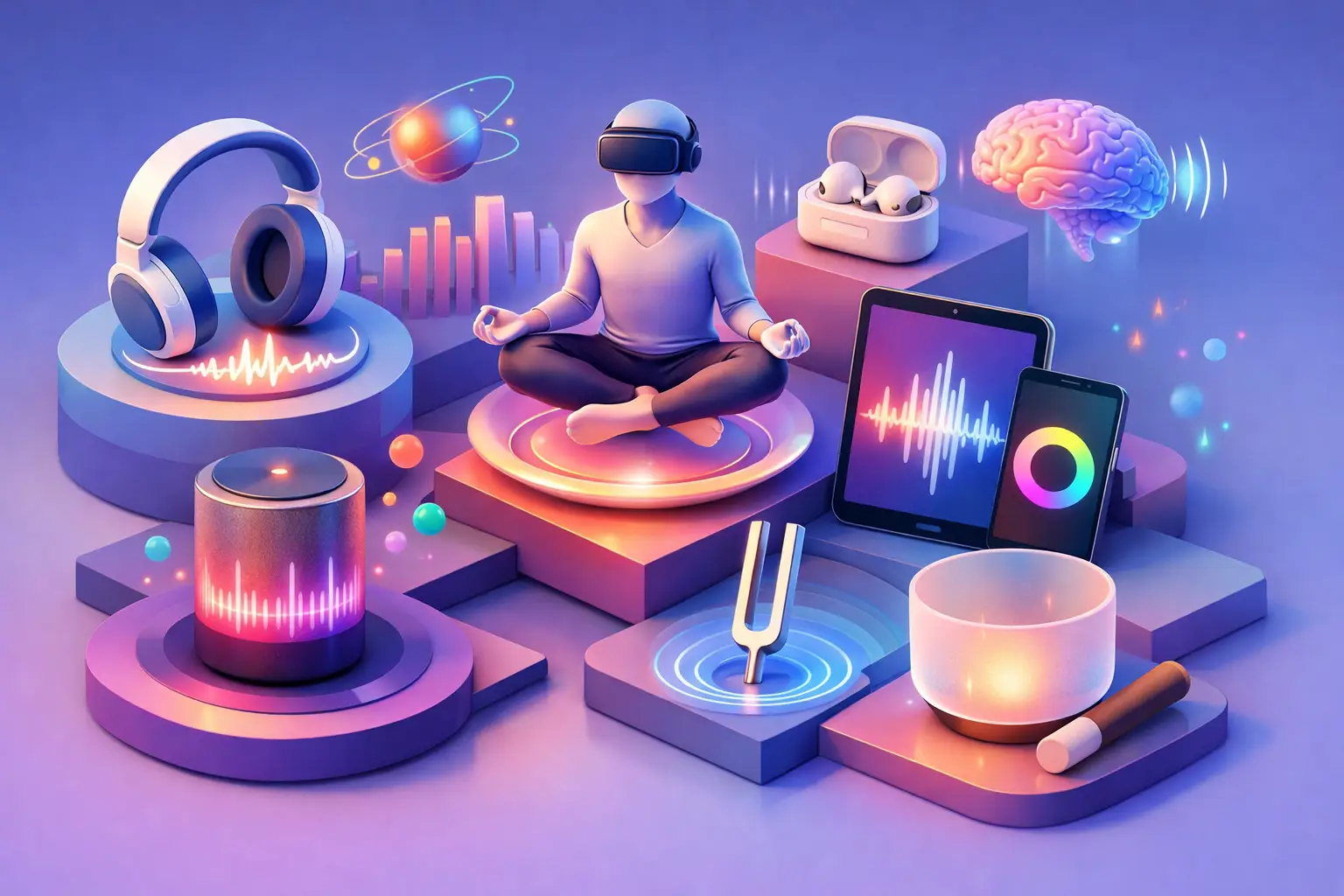
People are no longer hitting play just to relax. They want audio that does something specific - sharpen focus before a deep work session, soften mental noise after a stressful meeting, or help the brain shift gears before sleep. That demand is exactly why digital sound therapy trends are moving away from generic background sound and toward targeted, outcome-driven listening. Start Listening
For anyone serious about mental performance and emotional balance, this shift matters. The space is getting smarter, more personalized, and more practical. Sound therapy is no longer framed as a niche wellness ritual. It is becoming a daily-use tool for people who want more control over how they think, feel, and perform.
Why digital sound therapy trends are accelerating
The biggest driver is simple: people want fast support that fits real life. They do not want complicated systems, expensive equipment, or another habit that takes weeks to learn. They want something they can use during a commute, between meetings, at the gym, or before bed.
At the same time, the broader wellness market has trained people to expect personalization. Meditation apps introduced the idea of guided support on demand, but many users now want something more precise. They are looking for audio built around outcomes like concentration, calm, recovery, creativity, or emotional reset. That is where frequency-based tools, including binaural beats, are gaining ground.
There is also a growing comfort with brain-based wellness. Users do not need a lecture on neuroscience to be interested. They just want to know whether a tool helps them get into the state they need, when they need it.
1. Targeted states are replacing one-size-fits-all audio
One of the clearest digital sound therapy trends is the move from broad categories like “relaxation music” to more defined use cases. Users are no longer satisfied with vague promises. They want tracks designed for focus, stress reduction, mental reset, creative flow, study support, or sleep preparation.
This changes how people choose audio. Instead of asking, “What sounds nice?” they are asking, “What gets me into the right state fastest?” That is a major shift. It turns listening from passive consumption into active self-regulation.
The trade-off is that more specificity creates more expectation. A user looking for laser focus at 2 p.m. may not want the same sound profile that helps them wind down at 10 p.m. The brands winning in this category are the ones building libraries around real-life moments rather than broad mood labels.
2. Binaural beats are moving into the mainstream
Binaural beats used to sit on the edge of the wellness conversation. Now they are showing up in productivity routines, study playlists, recovery habits, and digital self-improvement systems. That is not just a branding shift. It reflects a wider appetite for audio that feels intentional and performance-oriented.
For high-functioning adults, this is appealing because binaural beats are low-friction. You do not need to stop your day, book an appointment, or learn a complicated practice. You put on headphones, press play, and support the mental state you are trying to reach.
That does not mean every user will respond the same way. Some people feel a clear difference quickly. Others need consistency, better timing, or the right listening context. But the broader trend is clear: binaural beats are being treated less like an experiment and more like a practical tool for focus and regulation.
3. Personalization is becoming the standard
Digital wellness as a whole has trained users to expect tailored experiences, and sound therapy is following that pattern. People want audio recommendations based on time of day, energy level, mood, and goal. Morning focus is different from afternoon recovery. Pre-sleep calm is different from emotional decompression after a hard conversation.
This is one of the most important digital sound therapy trends because it changes the product experience. A static library can still be useful, but a structured catalog with clear intended outcomes has more value. It reduces guesswork and helps people build reliable routines.
That is where specialized platforms have an advantage. A curated system of targeted tracks gives users a way to match audio to the moment instead of scrolling through endless ambient options. For a brand like Hertzbox Pro, that kind of precision aligns directly with what serious users want: less browsing, better state control.
4. Sound therapy is becoming part of performance routines
A few years ago, many people associated sound therapy mostly with meditation or sleep. That is changing fast. More users now see it as part of how they work, train, recover, and reset.
This shift is especially strong among professionals, students, and entrepreneurs. They are using audio before demanding tasks, during solo work blocks, after overstimulating days, and as a transition tool between responsibilities. In other words, sound therapy is moving from the edge of the routine to the center of it.
That matters because it raises the bar. If audio is part of a performance routine, it needs to feel reliable. The user is not looking for something pleasant. They are looking for something useful. Brands that understand this are speaking less about abstract wellness and more about practical outcomes like reduced mental friction, faster concentration, and cleaner recovery.
5. Simplicity is beating complexity
A lot of wellness tools lose people because they ask too much. Too many settings, too much education, too much effort before any payoff. One of the strongest trends in this space is the demand for simple execution.
People want to know three things: what this track is for, when to use it, and what kind of result to expect. That is it. They do not want to decode technical language every time they need support.
This does not mean users are anti-science. It means they are outcome-driven. They are open to frequency-based methods, but they prefer clear application over complicated explanation. The brands that will keep growing are the ones that make sound therapy feel usable in under a minute.
6. Emotional regulation is becoming a core use case
Focus gets attention because it is easy to market. But emotional regulation may be the bigger long-term opportunity. More people are looking for non-invasive ways to settle internal agitation, reduce overstimulation, and regain a sense of balance without derailing their day.
That makes sound therapy especially relevant. It can support a shift in state without demanding a full stop. A user can listen during a walk, while journaling, between meetings, or during a short reset window. For people managing modern levels of stress and cognitive overload, that convenience is powerful.
The nuance here is that emotional support is not the same as clinical care, and serious mental health issues require more than an audio track. Still, there is a large middle ground where people are not in crisis but are carrying too much tension, noise, and fatigue. That is where targeted sound therapy can become part of a healthier daily rhythm.
7. Better libraries are beating bigger libraries
More content does not automatically create more value. Users do not need thousands of random tracks. They need the right track at the right time. One of the less obvious digital sound therapy trends is that thoughtful structure is starting to matter more than raw volume.
A high-quality library should feel like a system, not a pile. The best collections help users move quickly from need to solution. They make it easy to identify whether the goal is concentration, calm, sleep support, emotional balance, or mental recovery.
This is where product design becomes strategy. If a user has to search too long, they lose momentum. If the catalog is organized around outcomes, the experience feels sharper and more effective. In a crowded market, clarity is a competitive advantage.
What these trends mean for users right now
If you are using sound therapy casually, these trends give you better options. If you are using it strategically, they give you more control. The real opportunity is not just listening more often. It is listening with purpose.
That means choosing audio based on the state you want to create, not just the mood you happen to be in. It means noticing whether a track works better before work, during work, or after stress. It means treating sound as a tool that can support how you function, not just how you relax.
The market will keep getting louder, but the winners will not be the brands making the biggest promises. They will be the ones helping users create real shifts with less friction. In a world full of mental overload, that kind of precision is not a luxury. It is an edge.
The smartest move is to stop asking whether sound therapy is trendy and start asking whether your audio is working hard enough for you.