
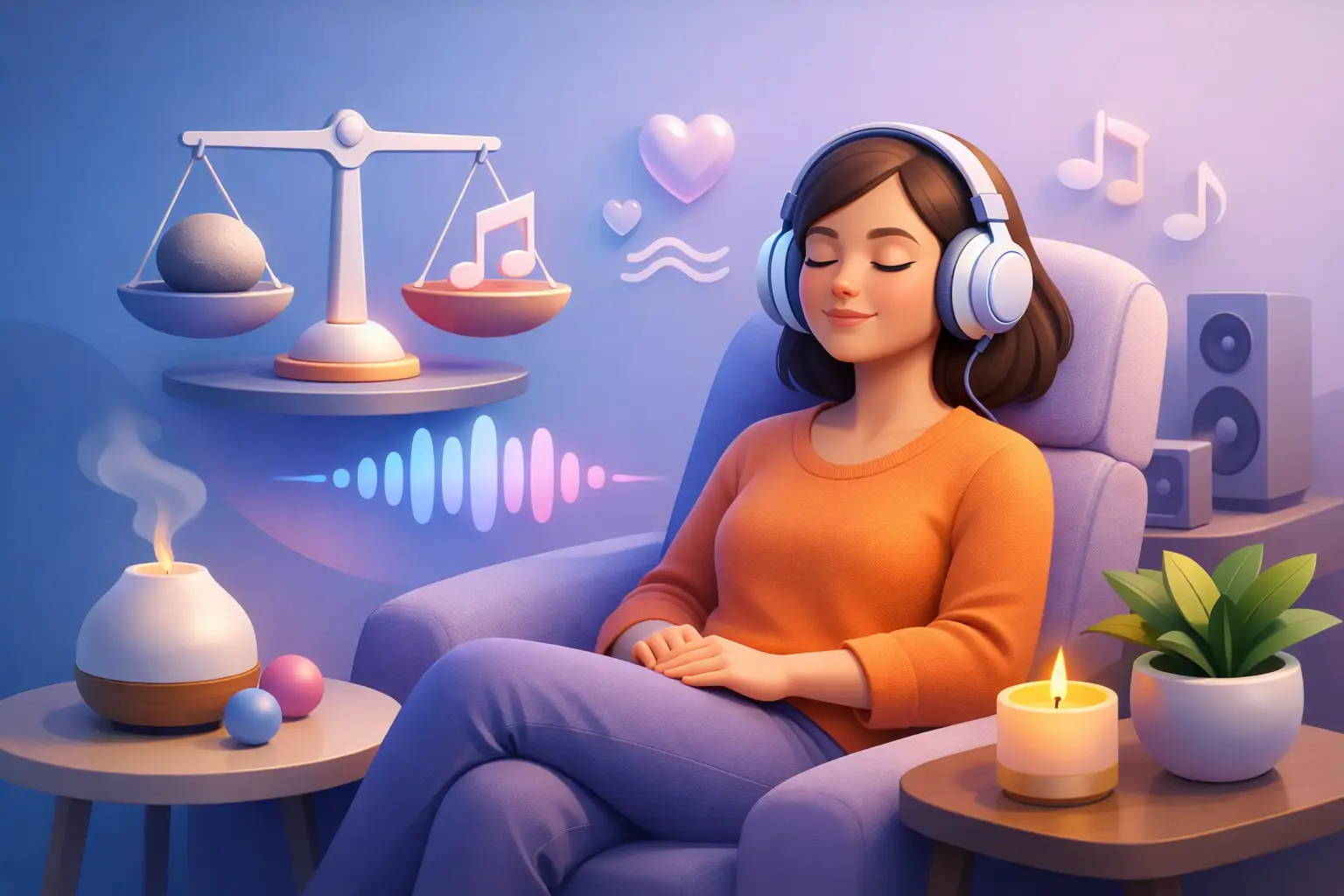
Your mood can shift fast. One tense email, one bad night of sleep, one overloaded afternoon - and suddenly your patience is thinner, your thoughts are louder, and your focus starts slipping. That is exactly why audio therapy for emotional balance has become so useful for people who want a practical way to regulate how they feel without adding another complicated routine. Start Listening
For the right person, sound is not just background noise. It is a tool. Used with intention, audio can help calm mental agitation, reduce emotional friction, and create a more stable internal state. That does not mean every track works the same way, or that one session fixes everything. It means the right audio can help shift your nervous system in a direction that supports better emotional control.
What audio therapy for emotional balance actually means
Audio therapy for emotional balance is the deliberate use of sound to influence mood, stress levels, and mental state. That can include calming ambient tracks, guided audio, nature soundscapes, and frequency-based tools such as binaural beats. The goal is simple: help your mind move out of chaos and into a steadier, more functional rhythm.
This matters because emotional balance is not just about feeling calm. It affects concentration, decision-making, sleep quality, patience, and resilience. When your emotional state is unstable, everything takes more effort. Small annoyances feel bigger. Focus becomes harder to hold. Recovery takes longer.
Sound-based tools appeal to people who want something fast, accessible, and easy to repeat. You do not need a full wellness ritual. You need a few minutes, the right track, and enough consistency to let your brain start recognizing the pattern.
Why sound can change how you feel
Your brain and body are constantly reacting to sensory input. Sound can stimulate memory, tension, calm, alertness, or emotional release depending on what you hear and when you hear it. That is why the same person can feel energized by one track, irritated by another, and deeply relaxed by a third.
Some audio works because it reduces overstimulation. Slower, softer soundscapes can lower mental noise and give your attention fewer things to fight with. Other audio works because it creates structure. Repetitive, predictable sound can make the mind feel safer and less scattered.
Binaural beats add another layer. They are designed to present slightly different frequencies to each ear, which can encourage the brain to respond in ways associated with specific states such as relaxation, focus, or calm alertness. The appeal is obvious for people who want to shift state on demand instead of waiting for their mood to improve on its own.
There is a trade-off, though. Audio therapy is not universal. Some people respond quickly. Others need more trial and error. And if your stress is tied to major trauma, severe anxiety, or a deeper mental health issue, sound can be supportive without being the full answer.
Where binaural beats fit in
If standard relaxation audio feels too passive, binaural beats often make more sense. They are performance-oriented. Instead of simply helping you zone out, they are often used to guide your brain toward a more useful mental state.
For emotional balance, that matters. The goal is not always sedation. Sometimes you do not need to feel sleepy or detached. You need to feel steady. You need less internal static and more control. That is where targeted frequency-based audio can be more useful than generic wellness playlists.
People often use binaural beats for three emotional outcomes: easing stress after overstimulation, reducing the sense of mental chaos that fuels irritability, and building a calmer baseline before work, study, or sleep. Those are practical use cases. They fit real life.
That is also why specialized platforms stand out. A focused library like Hertzbox Pro is built around outcomes, not filler. If your goal is emotional regulation, having access to tracks designed for calm, focus, and mental reset gives you more precision than scrolling through random audio and hoping something lands.
How to use audio therapy for emotional balance in real life
The biggest mistake is using audio only when everything already feels out of control. It can still help in that moment, but the better approach is to use it before the emotional crash fully hits.
Start by matching the audio to the state you are actually in. If you are anxious and mentally sped up, choose slower, calming audio. If you feel emotionally flat and unfocused, a more alert but stabilizing track may be better. If you are carrying stress from the day into the evening, use audio as a transition, not just as background.
Headphones are often important for binaural beats because each ear needs to receive a different signal. Volume should stay comfortable. Louder is not better. What matters is consistency and the quality of your attention.
Short sessions can work well. Ten to twenty minutes is enough for many people, especially if you use audio at the same time each day. Morning regulation, midday reset, and evening decompression are common windows because they align with natural shifts in stress and energy.
It also helps to pair your listening with a clear purpose. Sit still. Breathe normally. Close your eyes if that feels comfortable. Do not force an emotional breakthrough. Let the sound reduce resistance instead.
What to expect and what not to expect
You may notice a change in the first session. You may also notice almost nothing except a small drop in mental pressure. Both are normal.
Audio therapy works best when you think of it as state support, not magic. It can help interrupt spirals, soften emotional intensity, and create better conditions for focus and recovery. It cannot erase hard circumstances, fix poor sleep overnight, or replace therapy when therapy is needed.
The most useful early sign is often subtle. You react less sharply. Your thoughts feel less sticky. You regain a little space between stimulus and response. That space is where emotional balance starts.
It also helps to be honest about your environment. If you are trying to regulate your mood while multitasking, checking messages, and half listening to a track, results will be weaker. Audio therapy is simple, but it still works better when you give it a real shot.
Common mistakes that weaken results
A lot of people quit too early because they expect dramatic effects every time. Emotional regulation usually improves through repetition. Your brain responds to patterns, and state change becomes easier when you reinforce the same kind of shift regularly.
Another mistake is picking audio based on aesthetics instead of outcome. A track can sound beautiful and still be wrong for the moment. If you are emotionally overloaded, cinematic intensity may make you feel worse, not better. Choose function first.
Using the wrong setting can also get in the way. If you are trying to settle your mind in a noisy environment, your audio has to compete with everything around you. Sometimes the better move is waiting until you can give the session your full attention.
And finally, do not use audio as an excuse to ignore bigger patterns. If your emotional instability is being driven by chronic sleep loss, nonstop stimulation, or a schedule that keeps your nervous system on edge, sound can help - but it works best when it supports smarter habits.
Is audio therapy worth trying?
If you want a low-friction tool for emotional regulation, yes. Audio therapy for emotional balance is easy to test, easy to repeat, and flexible enough to fit into a demanding schedule. That matters for people who want real support without adding another complicated system to manage.
Its strongest advantage is not that it does everything. It is that it gives you a fast way to influence your internal state before stress starts running the show. For professionals, students, founders, and anyone trying to stay mentally sharp without feeling emotionally scattered, that is a meaningful edge.
The key is using it with intention. Pick audio that matches the result you want. Use it consistently. Pay attention to what changes. Emotional balance is not about becoming flat or detached. It is about staying clear, stable, and in control more often than not.
When your mind feels pulled in five directions, the right sound can help you take your center back.