
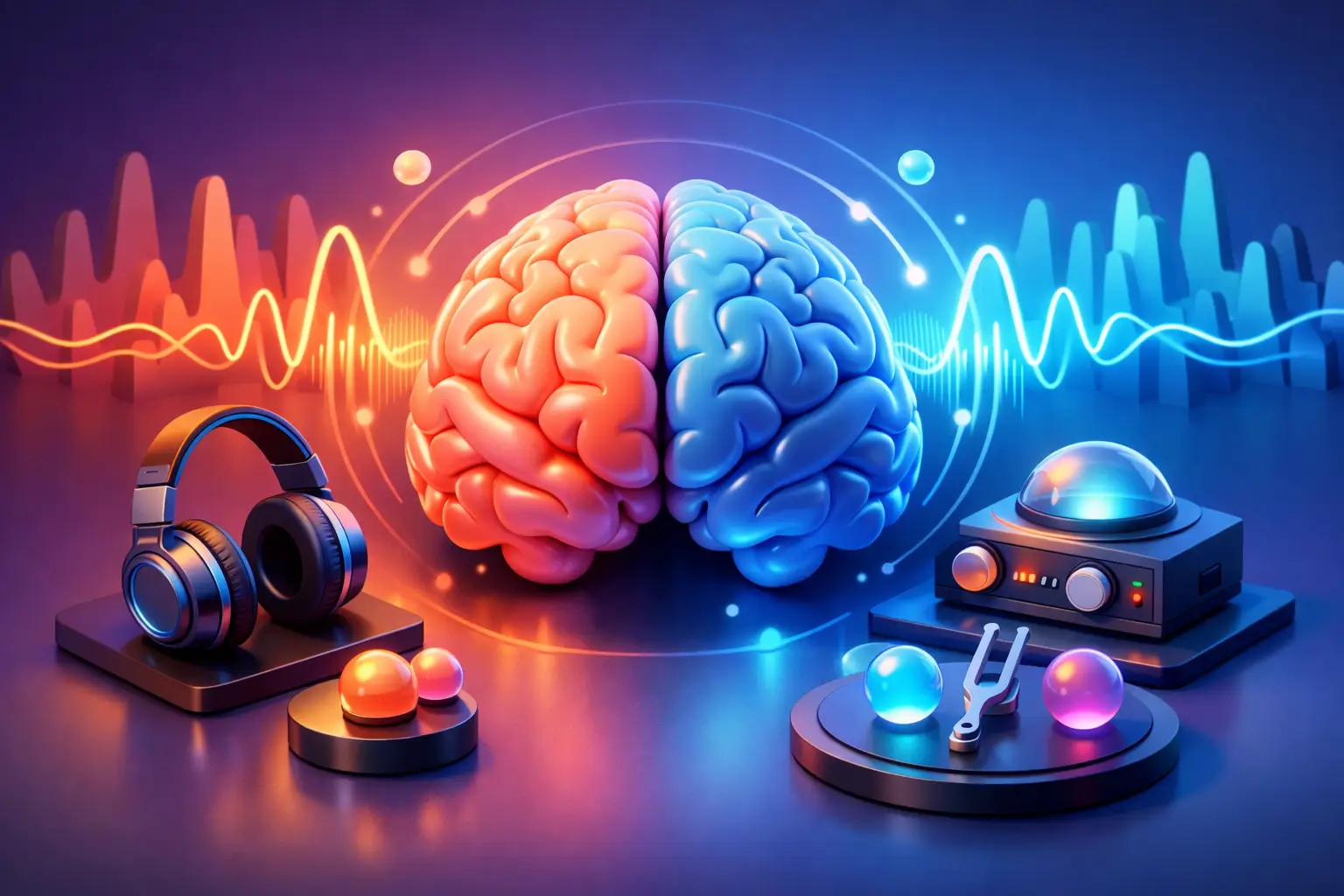
Your brain does not perform the same way at 8:00 AM, 2:00 PM, and 11:30 PM. Some hours feel sharp and controlled. Others feel noisy, scattered, or flat. That is exactly why brain optimization with sound has gained traction with people who want a faster way to shift mental state without adding another complicated routine.
Sound is one of the few tools you can use while working, recovering, studying, or resetting. You do not need a new skill. You do not need a major lifestyle overhaul. You need the right kind of audio, used with a clear purpose.
What brain optimization with sound really means
Brain optimization with sound is the practice of using targeted audio to support a more useful mental state. That might mean deeper focus during work, less internal tension before sleep, or a calmer baseline when your mind keeps jumping tracks.
The key word is support. Sound is not magic, and it is not a replacement for sleep, nutrition, movement, or medical care. But it can be a powerful lever. When the audio matches the outcome you want, it can help reduce mental friction and make that state easier to access.
That matters because most people do not struggle from lack of ambition. They struggle from state inconsistency. You sit down to work, but your brain feels foggy. You try to relax, but your thoughts keep firing. You want clarity, but your nervous system is stuck in overdrive. Sound gives you a direct way to influence the environment your brain is responding to.
Why sound affects performance in the first place
Your brain is always processing rhythm, tone, repetition, and sensory patterns. Some sounds agitate. Some distract. Some settle the system down. Some help create a sense of forward motion and sustained attention.
This is why the wrong audio can wreck concentration in ten minutes, while the right audio can make work feel cleaner and more stable. Lyrics may pull your verbal attention. Sudden dynamic changes may break your flow. Repetitive ambient structure, on the other hand, can reduce the urge to keep checking, switching, and drifting.
With binaural beats, the idea goes a step further. Two slightly different frequencies are presented separately to each ear, and the brain perceives a third internal beat based on the difference between them. People use these tracks to encourage states associated with focus, relaxation, meditation, or sleep support.
There is nuance here. Not every person responds the same way, and not every track fits every task. Some users feel an obvious shift quickly. Others notice the effect more as reduced resistance over time. The point is not chasing a dramatic sensation. The point is creating conditions where better focus, calm, or recovery becomes easier.
The biggest mistake people make with sound
They use one type of audio for everything.
If you use a relaxing track when you need sharp thinking, you may feel slower instead of clearer. If you play highly stimulating audio at night, your body may stay too alert to wind down. Good results usually come from matching the sound to the job.
A focused work block calls for a different sound profile than emotional decompression. Deep study is different from creative ideation. Stress relief is different from sleep preparation. Sound works best when you stop treating it like background filler and start using it like a performance tool.
How to use sound for focus, calm, and recovery
For focus, choose audio that feels stable, clean, and non-intrusive. You want enough structure to hold attention, but not so much complexity that your brain starts following the audio instead of the task. This is where many people prefer binaural beat tracks or minimal ambient layers over music with vocals.
For calm, the goal shifts. You are not trying to push energy higher. You are trying to lower internal noise. Softer, slower, less demanding audio often works better here, especially if you pair it with a short transition ritual like sitting still for two minutes before opening your laptop again or before getting into bed.
For recovery, timing matters as much as sound selection. A reset track in the middle of the day can help interrupt stress buildup before it becomes mental fatigue. Evening listening can help create separation between work mode and rest mode. In both cases, consistency often beats intensity.
When binaural beats make sense
Binaural beats fit best when you want a straightforward tool with a specific outcome in mind. They are especially useful for people who do not want to build a long meditation practice but still want support for concentration, relaxation, or emotional regulation.
They also fit well into real schedules. You can use them during a focused work sprint, while studying, during a post-work reset, or as part of a sleep routine. That convenience is a major reason audio-based optimization keeps growing. It respects the fact that most people need tools that work inside daily life, not outside it.
Still, expectations matter. Binaural beats are not a switch that instantly transforms every session into peak performance. Think of them more like environmental design for the mind. You are shaping conditions so your brain can move toward the state you want with less friction.
What results are realistic
Realistic results are better concentration, smoother transitions between tasks, less mental chatter, improved ability to settle down, and a stronger sense of control over your internal state. Those outcomes are meaningful because they compound.
A slightly better focus session repeated five times a week changes output. A faster recovery window after stress changes mood. A more reliable wind-down routine changes sleep quality. The strongest benefit of sound is often not a dramatic one-time effect. It is the repeatable edge it gives your day.
That said, it depends on how you use it. If you expect audio to overpower exhaustion, chronic stress, or a chaotic work environment every time, you will be disappointed. Sound works best as part of a smart system. Protect attention, reduce unnecessary interruptions, and choose tracks with intent.
Building a simple sound routine that sticks
Start with one goal, not five. Pick the state you care about most right now - focus, calm, or sleep support. Then use one track consistently in the same context for a week.
That consistency helps you judge the effect more clearly. If you keep switching tracks, tasks, and listening times, it is hard to know what is helping. A simple routine also creates mental association. Over time, the audio itself can become a cue that tells your brain what mode to enter.
Use headphones when the track calls for binaural beats, because separate signals to each ear matter. Keep volume comfortable, not forceful. Louder is not better. In many cases, lower-volume listening creates a stronger experience because it blends into your attention rather than competing with it.
If you want a more structured approach, a dedicated library with tracks built for different outcomes can save time. Instead of searching endlessly for something that might work, you can choose audio based on the state you need. That is part of why specialized platforms like Hertzbox Pro appeal to people who want a more direct path to mental clarity and emotional balance.
Who gets the most from brain optimization with sound
People who benefit most are usually not looking for entertainment. They are looking for control. Professionals who need clean focus. Students who need help staying with the material. Entrepreneurs who want to shift out of stress faster. Wellness-minded users who want a non-invasive way to support emotional balance.
The common thread is not age or job title. It is state awareness. If you know your brain does not always show up the same way, you are already the kind of person who can benefit from using sound intentionally.
That is the real power here. You stop waiting for the perfect mood, the perfect energy, or the perfect mental day. You start creating better conditions on purpose. And once you realize your internal state is more trainable than random, sound stops being background noise and starts becoming leverage.
The smartest way to use audio is not to chase a miracle. It is to make your good states easier to reach, more often, with less effort.