Your nervous system does not always need a long explanation. Sometimes it needs a signal that the pressure can come down. Anxiety audio tools give you a practical way to change your environment, interrupt mental noise, and create a more grounded internal state - whether you have five minutes between meetings or need help settling down at night.
The right sound will not erase every source of anxiety. It can, however, become a reliable cue for your brain: this is the moment to slow down, breathe deeper, and stop feeding the spiral. That makes audio a powerful addition to the tools you already use for sleep, focus, emotional regulation, and recovery.
What Anxiety Audio Tools Actually Do
Anxiety often creates a state of high alert. Thoughts race, the body stays tense, and even small decisions feel heavier than they should. Audio can help shift attention away from that loop by giving the brain something consistent and predictable to process.
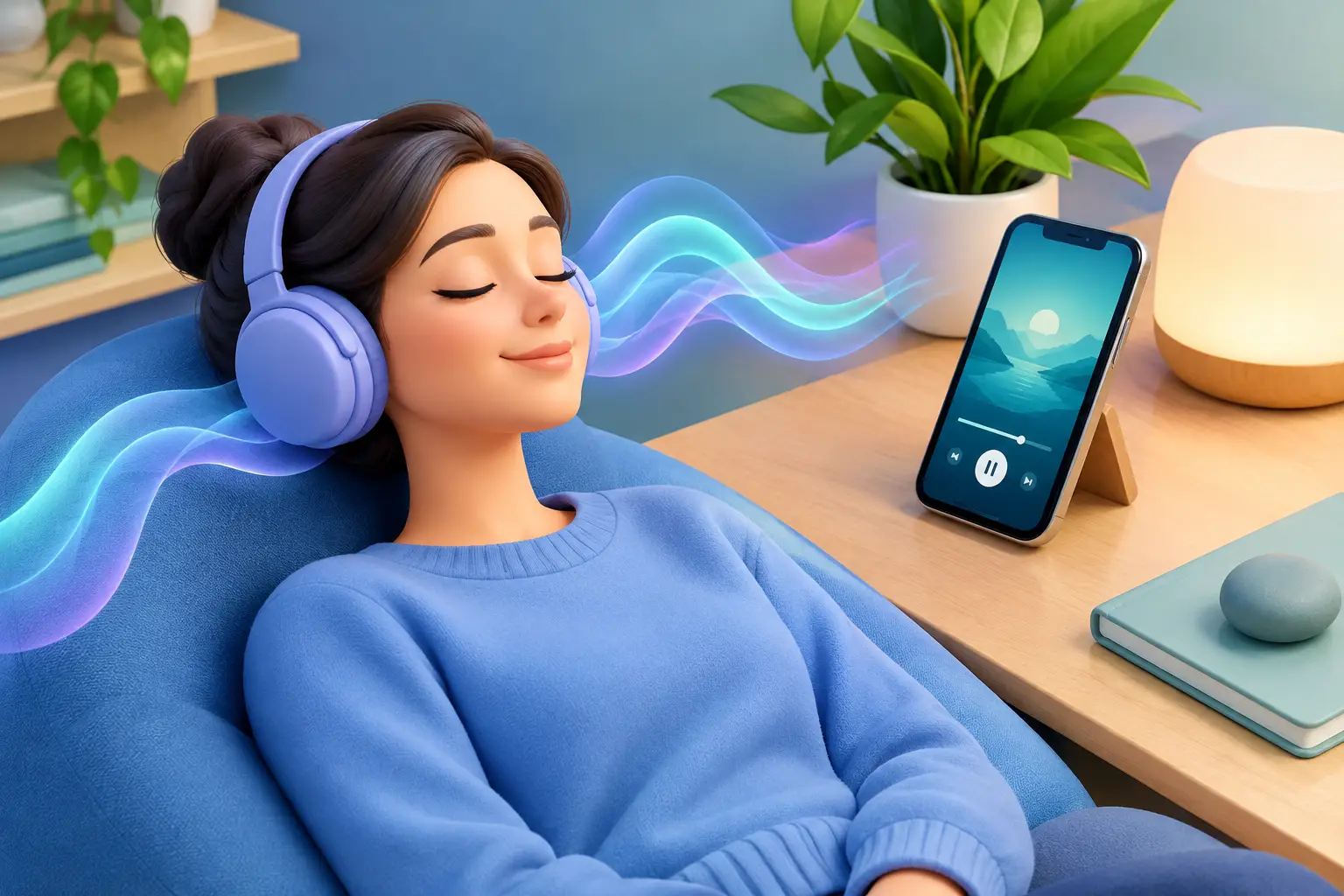
Some tracks use calming music, nature sounds, spoken guidance, or steady background noise. Others use binaural beats - two slightly different tones played separately in each ear through headphones. Your brain perceives the difference between those tones as a rhythmic pulse. Many people use this type of audio as part of a wind-down routine, a meditation practice, or a focused reset when their thoughts feel scattered.
The benefit is not that one track forces you to feel calm on command. The benefit is that it reduces friction. Instead of trying to mentally fight anxiety, you press play, get still, and give your mind a better direction.
The Best Types of Anxiety Audio Tools
Different audio works for different moments. A track that helps you sleep may feel too slow when you are tense before a presentation. The goal is not to find one perfect sound. Build a small rotation that matches the state you want to create.
Binaural beats for a focused reset
Binaural beats are especially useful when anxiety shows up as mental clutter. You are not necessarily panicking, but you cannot focus, your thoughts keep switching channels, and your to-do list feels like static.
Use headphones, choose a comfortable volume, and give the session your full attention for at least 10 to 20 minutes. You can listen with your eyes closed, while journaling, or while doing one low-pressure task. The point is to stop multitasking your recovery.
A curated library like Hertzbox Pro gives you targeted options for calming down, concentrating, and creating more mental balance without turning your routine into another project to manage.
Nature sounds for immediate environmental relief
Rain, ocean waves, wind, and forest ambience can be effective when your surroundings are overstimulating. They do not demand much from you. They simply create a softer soundscape than a noisy office, a busy apartment, or a stream of notifications.
Nature audio is a strong choice when you need background support while working or transitioning out of work mode. It may be less effective if you need a clear mental anchor, since ambient sounds can fade into the background quickly. In that case, pair them with breathing or a short body scan.
Guided relaxation when your mind needs structure
If silence makes your thoughts louder, guided audio can help. A voice that directs your breathing, attention, or muscle relaxation gives your mind a simple job to do.
This is often useful during a spike of anxiety, especially if you struggle to decide what to do next. Follow the instructions rather than evaluating whether you are calm enough yet. The shift is usually gradual, not dramatic.
Brown noise and steady sound for intrusive distractions
Brown noise is deeper and less sharp than white noise. Some people find it helps soften distracting sounds and gives their attention a stable place to land. It can be useful for studying, reading, or winding down after a busy day.
Keep the volume modest. Loud audio can add strain, especially when you are already overstimulated. The best anxiety audio tool is one you can listen to comfortably, not one that overwhelms your ears in the name of relaxation.
How to Use Anxiety Audio Tools So They Actually Help
The biggest mistake is treating calming audio like a last-second emergency button. It can support those moments, but it becomes more effective when your brain learns to associate certain sounds with a specific reset ritual.
Start by choosing one predictable time of day. This could be before opening your inbox, after lunch, during your commute home, or in bed before sleep. Listen to the same type of track at roughly the same time for a week. Repetition builds recognition. Over time, that familiar sound can become a faster cue to downshift.
Keep your first sessions simple. Sit somewhere comfortable, put your phone face down, and listen for 10 minutes. Do not scroll while the audio plays. Do not expect yourself to meditate perfectly. Just notice what happens in your body: jaw tension, shoulder position, breath speed, or the urge to check your phone.
If anxious thoughts keep arriving, do not try to force them away. Label them briefly - planning, worrying, replaying - and return your attention to the audio. That small return is the practice.
Match the Track to the Moment
When anxiety is sharp and physical, choose slow, low-stimulation audio and combine it with longer exhales. If you feel mentally overloaded but still need to work, choose a focus-oriented binaural beat or steady background sound that supports concentration without making you sleepy.
For nighttime anxiety, avoid treating sleep audio as entertainment. Dim the lights, move your phone out of reach, and let the track mark the end of input for the day. Your goal is not to chase sleep. Your goal is to create conditions where sleep has room to happen.
It also helps to know when audio is not enough. If anxiety is persistent, severe, disrupting work or relationships, or causing panic attacks, a licensed mental health professional can offer support beyond a self-guided tool. Audio can complement care, but it is not a replacement for individualized treatment or urgent help when you need it.
A 10-Minute Audio Reset for High-Pressure Days
Use this when you feel your mind accelerating and need to regain control before the day runs away from you.
Put on headphones and choose calming instrumental audio, nature sounds, or a binaural beat designed for relaxation. Set a 10-minute timer so you are not tempted to check the clock. For the first two minutes, breathe normally and let the sound fill the space.
For the next five minutes, make your exhale slightly longer than your inhale. Nothing extreme. A comfortable inhale followed by a slower exhale is enough. Let your shoulders drop each time you breathe out.
For the final three minutes, ask one useful question: “What is the next action that would make this moment easier?” Keep it small. Drink water. Send one email. Step outside. Open the document. Anxiety gets louder when every task feels equally urgent. One clear action restores momentum.
Build a Sound Routine, Not a Dependence
Audio is most useful when it expands your ability to regulate yourself. You should feel more capable after using it, not convinced you cannot cope without it. Think of your tracks as a training environment for your attention - a repeatable space where you practice moving from pressure toward clarity.
Experiment with volume, session length, and timing. One person may feel better with 15 minutes of headphones before work. Another may prefer soft rain sounds in the background while preparing dinner. There is no prize for choosing the most technical method. Choose the one you will genuinely use.
The strongest anxiety audio tools are not the ones with the boldest claims. They are the ones you return to when your mind gets loud, your body feels tight, and you need a clear signal that you can reset from here.