Your stress does not always need a two-hour solution. Sometimes it needs a clean break between the pressure you are carrying and the next thing you need to do. The best audio sessions for stress create that break fast: a focused pocket of sound that lowers mental noise, steadies your breathing, and gives your attention somewhere calmer to land.
For busy professionals, students, founders, and high performers, audio is not about escaping life. It is about changing your state on purpose. The right session can turn a tense commute, a cluttered workday, or a restless evening into a moment of reset. The key is choosing sound that matches the kind of stress you are actually feeling.
What Makes an Audio Session Effective for Stress?
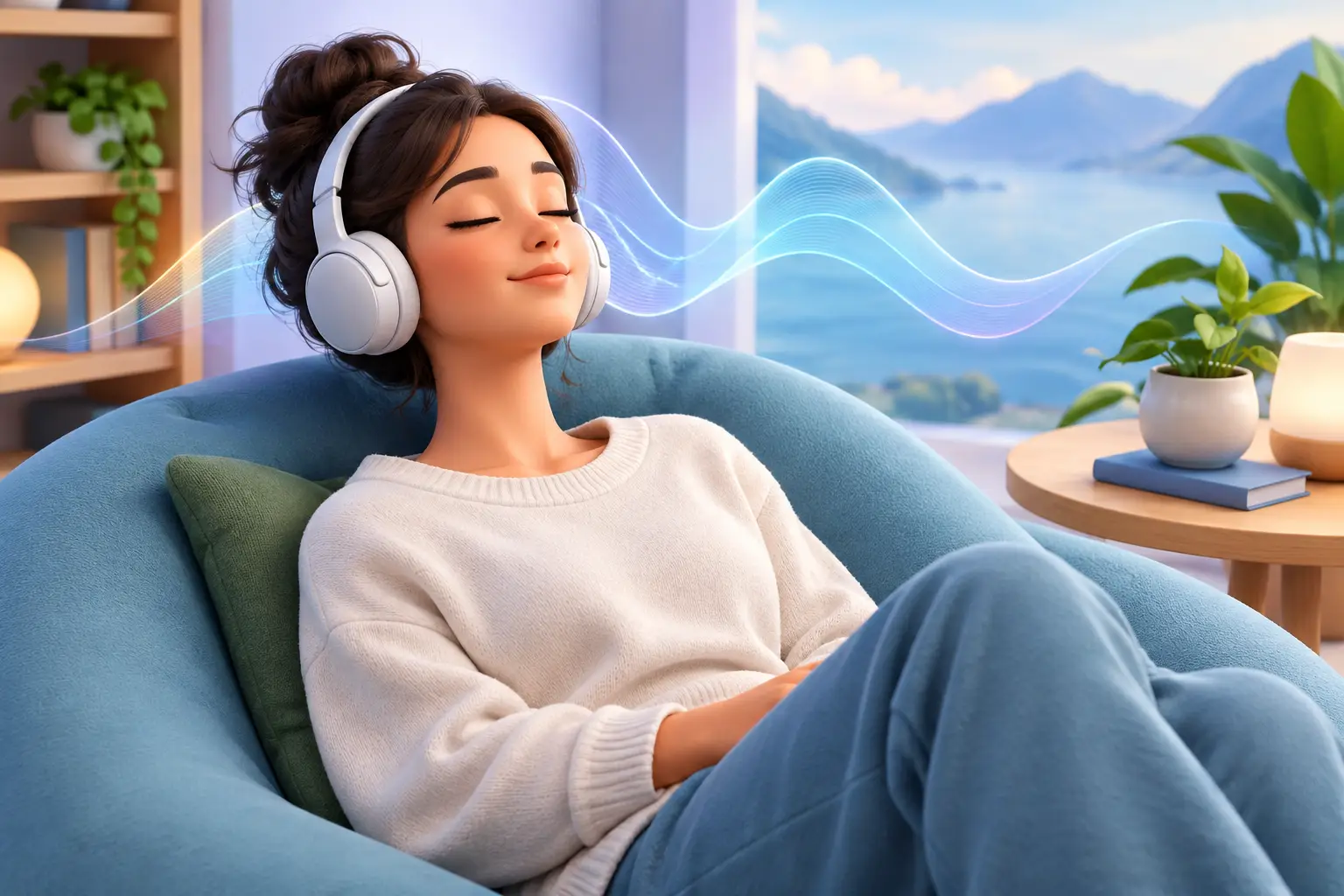
A useful stress-relief session does more than sound pleasant. It gives your brain a simple, repeatable cue: slow down, narrow your focus, and stop scanning for the next demand. That cue may come through a guided voice, soft ambient sound, paced breathing, or binaural beats heard through headphones.
The best choice depends on your starting point. If your mind is racing, you may need a gentle guided session that directs your attention away from looping thoughts. If you feel overloaded but still need to work, an instrumental or binaural beat session may be a better fit because it can support calm without pulling you out of the task.
Do not confuse intensity with effectiveness. A dramatic soundtrack can feel powerful, but stress relief usually works better when the audio is predictable, uncluttered, and easy to stay with. You should not have to fight the session to relax.
The Best Audio Sessions for Stress by Moment
For an overactive mind: Slow guided breathing audio
When your thoughts are sprinting, start with audio that gives your breath a rhythm. A calm voice that cues a longer exhale can be especially useful after a difficult meeting, before sleep, or when you notice yourself jumping between worries.
Look for a short session, usually five to 15 minutes, with minimal storytelling and clear pauses. The goal is not to analyze every thought. It is to stop feeding the momentum. Breathing-focused audio works well for people who want a direct instruction to follow rather than open-ended meditation.
If counting breaths makes you more anxious, skip rigid patterns. Choose a softer body-scan or grounding track instead. Stress relief is not a test of whether you can relax correctly.
For tense muscles and physical agitation: Body-scan sessions
Stress often shows up before you name it. Your jaw tightens. Your shoulders creep upward. Your chest feels compressed. A body-scan session helps you notice those signals and release some of the physical effort you have been holding all day.
These sessions work best when you can sit back or lie down without needing to make decisions. Choose a track that moves slowly through the body, from face and shoulders to hands, stomach, and legs. The pace matters. Fast instructions can make a stressed nervous system feel rushed all over again.
Use this format after work, following a workout, or before bed. It is less useful in the middle of a deadline, when you may need calm focus rather than full decompression.
For work stress: Low-distraction binaural beat sessions
Work stress has its own pattern. You may not be panicking, but your attention is fractured, your inbox keeps pulling you away, and every task feels heavier than it should. In that state, a low-distraction binaural beat session can be a practical tool for creating a calmer focus environment.
Binaural beats use slightly different tones in each ear, which is why headphones are essential. Some listeners find the steady, minimal sound helps them settle into a task with fewer interruptions. Research on binaural beats and stress is still mixed, so treat them as a personal wellness tool, not a medical treatment or a guaranteed brain hack.
The advantage is simplicity. There is no voice to follow and no visual exercise to complete. Put on headphones, choose a session designed for calm focus or relaxation, lower the volume, and give yourself one protected block of work. Hertzbox Pro is built for this kind of targeted use, with a large library of binaural beat sessions for different mental states.
For emotional overload: Nature soundscapes with light music
When the day has been loud, more voices may be the last thing you want. Rain, ocean waves, wind, soft piano, and spacious ambient music can create relief without asking anything from you.
Nature-based sessions are strong options for transitions: the drive home, meal prep, a walk, or the first 20 minutes after you close your laptop. They can make a room feel less demanding and give your nervous system a chance to come down gradually.
Choose soundscapes that are consistent. Sudden thunder, dramatic crescendos, or frequent bird calls can be distracting for some people. Your ideal track may be almost boring. That is often a sign it is doing its job.
For nighttime stress: Nonverbal wind-down sessions
At night, your goal changes. You are no longer trying to recover and perform. You are signaling that the day is over. The best nighttime audio has very little urgency: slower textures, lower volume, no motivational language, and no content that triggers planning.
A 20- to 45-minute ambient, sleep-focused, or relaxation session can become a powerful consistency cue. Use the same or similar audio for several nights so your brain starts associating it with winding down. Keep your phone facedown and avoid switching tracks every few minutes. Searching for the perfect sound is not relaxing.
How to Choose the Right Session in Under a Minute
Before pressing play, ask one question: do I need to calm down, concentrate, release tension, or prepare for sleep? Your answer eliminates most of the noise.
Choose guided breathing or a body scan when stress feels emotional or physical. Choose light ambient audio or binaural beats when you need to keep working without feeling so internally crowded. Choose a longer nonverbal session when the day is done and sleep is the priority.
Then match the length to the moment. A five-minute reset is realistic between meetings. A 15-minute session can interrupt a stress spiral after work. A 30-minute track is better for a deep wind-down. Starting small is smarter than saving stress relief for an ideal schedule that never arrives.
Make Audio a State-Change Ritual
The session matters, but the ritual around it multiplies its effect. Use the same chair, put on the same headphones, dim a light, or take three slower breaths before play begins. These small signals tell your brain that this is a distinct mode, not just more content competing for attention.
Volume matters too. Keep it low enough that your body does not feel invaded by sound. With binaural beats, use stereo headphones and avoid listening while driving, crossing streets, operating equipment, or doing anything that needs full situational awareness.
Give a new session three tries before judging it. The first listen may feel unfamiliar because your brain is used to stimulation and urgency. If you still feel irritated, restless, or more alert afterward, that format is probably not your match. Move on without forcing it.
What Audio Cannot Replace
Audio can support emotional regulation, but it cannot solve every source of stress. If you are dealing with persistent panic, trauma symptoms, severe sleep disruption, depression, or stress that is affecting your safety or daily functioning, professional support deserves a place in your plan. Sound can be a helpful layer alongside therapy, medical care, movement, sleep, and honest boundaries.
There is also no single frequency, genre, or session length that works for everyone. Your best session is the one that leaves you feeling less reactive and more able to choose your next action. That is the result worth measuring.
Start with one moment you already have: after the last meeting, before opening a study session, or when your head hits the pillow. Press play before stress decides the next hour for you.