
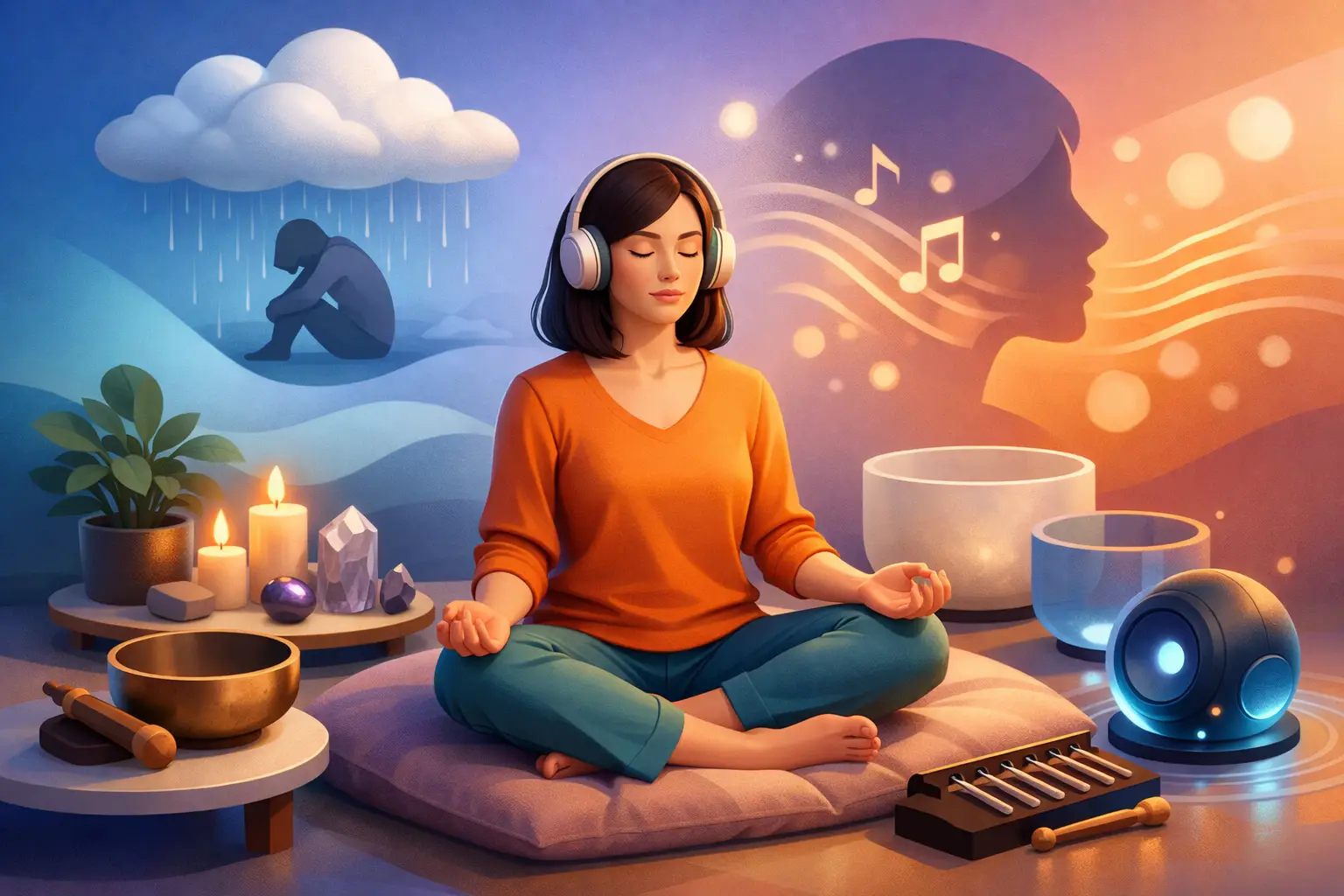
Burnout does not always look dramatic. Sometimes it looks like staring at your screen for 20 minutes, rereading the same sentence, and still getting nowhere. Sometimes it feels like your brain is online, but your energy, patience, and motivation have logged off. That is exactly why more people are turning to sound therapy for burnout - not as a trend, but as a practical way to calm overload and create space for recovery. Start Listening
If your nervous system feels pinned in overdrive, silence is not always enough. For a lot of high-performing adults, the real challenge is not just stress. It is mental friction. The mind keeps spinning, the body stays tense, and even downtime does not fully register as rest. Sound-based tools can help interrupt that loop.
What sound therapy for burnout actually targets
Burnout is more than being tired. It usually combines mental exhaustion, emotional depletion, reduced focus, irritability, and a growing sense that even simple tasks cost too much. When that pattern drags on, your brain can get stuck in a state of constant activation.
Sound therapy for burnout works by influencing your internal state through auditory input. That can include calming frequencies, ambient soundscapes, and binaural beats designed to support relaxation, focus, or emotional reset. The goal is not to magically erase stress. The goal is to help shift your nervous system out of survival mode so recovery becomes more possible.
That distinction matters. If burnout is being fueled by impossible workload, poor boundaries, lack of sleep, or chronic pressure, no audio track can solve the root problem on its own. But the right sound can make it easier to regulate your state, think more clearly, and stop compounding the damage.
Why sound works when your brain feels overloaded
When you are burned out, traditional self-care can feel like another task. Journaling requires effort. Meditation can feel frustrating. Exercise helps, but not always in the exact moment when your mind is buzzing and your attention is shot.
Sound is different because it asks less from you. You do not have to perform wellness. You press play, put on headphones if needed, and let the auditory pattern do part of the work.
This is where binaural beats get attention. They use two slightly different frequencies, one in each ear, which the brain processes as a third perceived beat. People use them to support focus, calm, rest, or mood regulation depending on the track. For someone dealing with burnout, that can be valuable because the barrier to entry is low and the effect can fit into real life - before work, between meetings, after a stressful day, or during a reset break.
The biggest benefit is often state change. Not total recovery in 15 minutes. Just enough downshift to reduce the sense of inner static.
The real benefits of sound therapy for burnout
The strongest case for sound therapy is not that it replaces recovery. It is that it can support the conditions recovery needs.
First, it can help lower mental noise. Burnout often comes with racing thoughts, decision fatigue, and a constant background hum of pressure. Structured sound gives the brain something consistent to follow, which can reduce that scattered feeling.
Second, it can support emotional regulation. When you are burned out, small stressors hit harder. A delayed email, a noisy room, one more demand - suddenly everything feels sharp. Calming audio can soften that edge and make your reactions less intense.
Third, it can improve transition time. One of the most frustrating parts of burnout is how hard it becomes to switch states. You finish work, but your body still feels at work. You wake up, but your brain does not fully engage. Sound can act as a bridge between those states.
Fourth, it may help rebuild focus in smaller windows. Burnout crushes concentration. The answer is not always to force longer work sessions. Often it is better to create short, cleaner periods of attention with the right support. That is one reason performance-focused audio tools have become popular with professionals and students alike.
What kind of sound is best?
It depends on what your burnout looks like.
If your main issue is agitation, overstimulation, or trouble winding down, slower and more calming sound profiles tend to make more sense. These are useful at night, after intense work blocks, or when your body feels wired but tired.
If your burnout shows up as fog, low motivation, and mental drag, tracks built for clarity and focus may be more helpful. Not because they override exhaustion, but because they can reduce some of the friction around starting and sustaining a task.
If your day swings between the two, you may need both. Many people do better with a simple audio routine that matches the time of day: something focusing in the morning, something regulating midday, and something deeply calming at night.
That is also where a structured library becomes more useful than random audio searching. Instead of guessing what might work, you can match a track to the state you want to create. Start Listening is built around that kind of targeted use, which is why it appeals to people who want results instead of more noise.
What sound therapy can and cannot do
This is where honesty matters.
Sound therapy can help reduce tension, create emotional breathing room, support better focus, and make your recovery routine easier to stick with. It can give you a fast, non-invasive tool when your brain feels overloaded and your nervous system needs a reset.
It cannot fix a toxic job, reverse long-term sleep debt overnight, or compensate for a schedule that never lets you recover. It also will not feel the same every day. Some sessions may click immediately. Others may just take the edge off. That is still useful.
The best results usually come when sound is part of a broader burnout response. Better boundaries. Better sleep. Less multitasking. More realistic pacing. The audio helps you access the state where those choices become easier to make.
How to use sound therapy for burnout without overcomplicating it
Keep it simple. Burnout already drains your decision-making capacity, so your routine should feel almost automatic.
Start with one 10 to 20 minute session at the point in your day where you usually crash. For some people that is first thing in the morning, when dread kicks in before momentum does. For others it is right after work, when stress keeps bleeding into the evening.
Use headphones if the track calls for binaural beats. Sit or lie down somewhere you do not need to stay socially available. The goal is not perfect stillness. The goal is fewer inputs.
Pay attention to outcomes, not hype. After a week, ask yourself a few direct questions. Am I less reactive? Is it easier to settle down? Can I focus faster? Do I feel more restored after short breaks? Those are the signals that matter.
If one type of track makes you feel more irritated or restless, change it. Sound is personal. The right choice is the one that helps your body and mind move in the direction you need.
When burnout is severe
If burnout has moved into constant anxiety, depression, panic, insomnia, or physical symptoms you cannot shake, sound therapy should not be your only support. It can still be useful, but it works best alongside real care, real rest, and sometimes professional help.
There is no weakness in needing more than one tool. In fact, that is the smart approach. Burnout is rarely caused by one thing, so recovery rarely comes from one thing either.
What sound can offer is immediate access to interruption. A pattern break. A nervous system cue that says you do not have to stay locked at full intensity. For people who have been white-knuckling their way through stress, that shift can be more powerful than it sounds.
Burnout narrows your world. Everything starts to feel heavy, loud, and harder than it should. The right audio will not solve every pressure around you, but it can help you reclaim focus, calm, and a little more control over your internal state. Sometimes that is the first real opening recovery needs.