
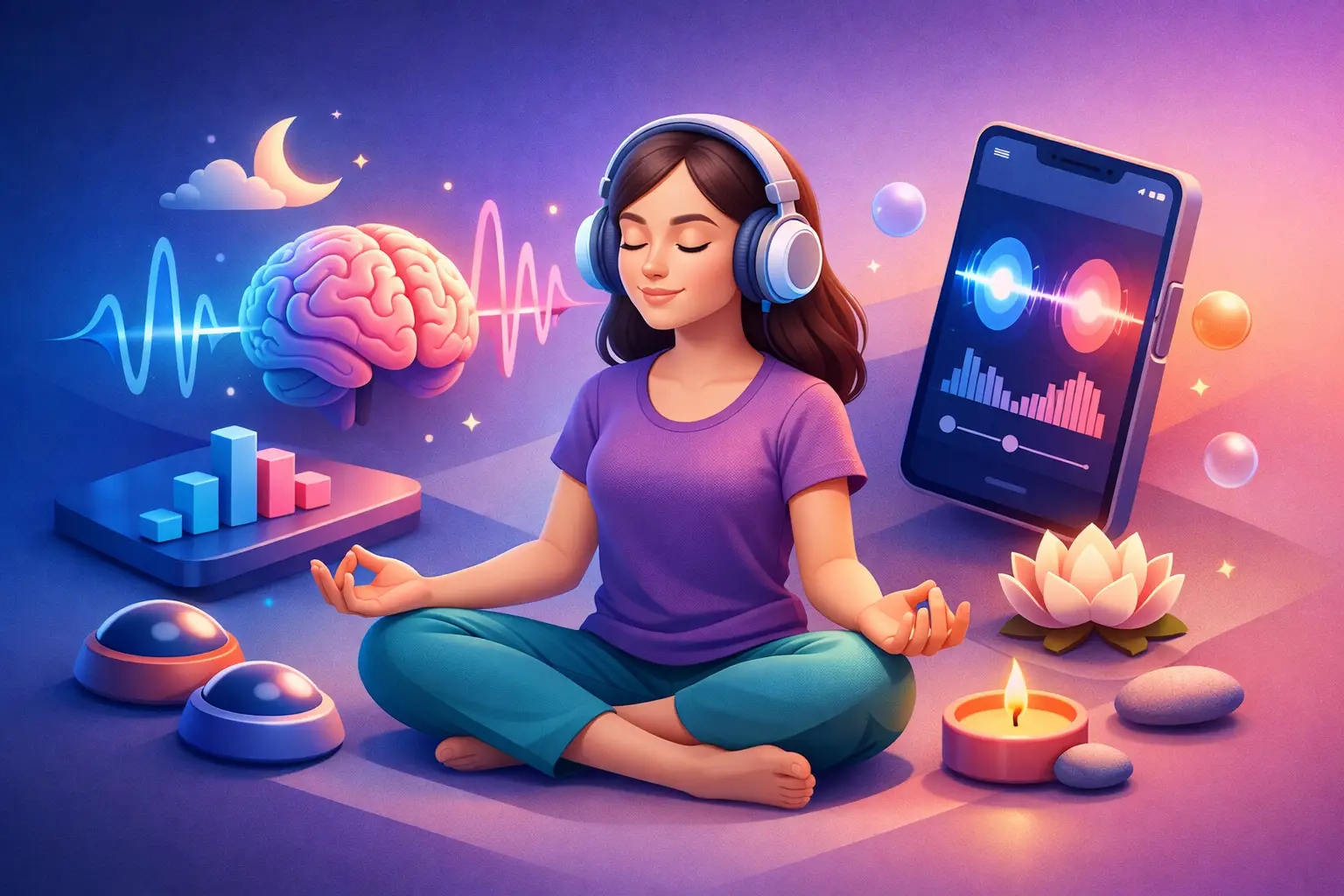
The stress spike rarely arrives at a convenient time. It hits between meetings, before an exam, after a hard conversation, or at 2 a.m. when your brain will not power down. Can binaural beats reduce stress in those moments? They may help some people shift into a calmer state, especially when used intentionally with headphones, a quiet setting, and realistic expectations.
Binaural beats are not a medical cure for anxiety or chronic stress. They are an audio tool: fast to use, non-invasive, and easy to build into a routine. For people who struggle to sit still with traditional meditation or need a mental reset before demanding work, that can be a meaningful advantage.
Can Binaural Beats Reduce Stress? The Straight Answer
Possibly, but the effect is personal. Early research and small studies suggest binaural beats may support relaxation, lower perceived anxiety in certain settings, and improve mood for some listeners. Other studies find modest or inconsistent results. The research is still developing, and outcomes vary based on the frequency used, the length of the session, the listener's expectations, and the situation creating the stress.
That does not make the experience worthless. Stress is not only a number on a lab report. It is also racing thoughts, muscle tension, shallow breathing, irritability, and the feeling that your attention is being pulled in six directions at once. If a structured audio session helps you pause, settle, and regain control, it can become a useful part of your stress-management system.
Think of binaural beats as a state-shifting tool, not a replacement for sleep, therapy, movement, medical care, or solving the source of the pressure. They can help create the conditions for a calmer response. They cannot erase an overloaded schedule, grief, burnout, or a clinical mental health condition by themselves.
What Your Brain Hears During a Binaural Beat
A binaural beat is created when each ear receives a slightly different tone through stereo headphones. Your brain processes the difference between those tones as a subtle rhythmic pulse. For example, if one ear hears 200 Hz and the other hears 208 Hz, the perceived beat is 8 Hz.
Many stress-relief tracks use slower beat ranges commonly associated with relaxed or meditative states, often alpha or theta ranges. The language around brainwave frequencies can get exaggerated online. Listening to a specific frequency does not force your brain into a perfect state on command. A better way to view it is as an auditory cue that may make relaxation easier for some people.
The most practical benefit may come from the full listening experience. Headphones reduce outside noise. A steady sound gives your attention one place to land. A dedicated 15-minute session interrupts doom-scrolling, multitasking, and reactive thinking. Your nervous system gets a break from constant input.
For a busy professional, student, or entrepreneur, that interruption matters. A calmer mind is not just about feeling better. It can mean cleaner decisions, fewer impulsive reactions, and a faster return to focused work.
How to Use Binaural Beats for Stress Relief
Start with a low-friction routine. Choose a time when stress is rising but you still have room to respond: before a presentation, after work, during a study break, or before bed. Use stereo headphones, because the left-right difference is central to the binaural beat experience. Keep the volume comfortable and low enough that it never feels aggressive or distracting.
Give a session 10 to 20 minutes. Sit or lie down somewhere safe, close your eyes if that feels comfortable, and let the track play without checking messages. You do not need to empty your mind. Notice when your thoughts wander, then bring your attention back to the sound and your breathing.
Pairing the audio with a simple physical signal can strengthen the routine. Try slow breathing, relaxing your jaw and shoulders, or placing both feet firmly on the floor. The goal is not to chase a dramatic sensation. The goal is to move from activated and scattered to steadier, clearer, and more capable.
Consistency beats intensity. One long session after a brutal week may feel good, but a short daily practice is more likely to teach your brain that this audio is a cue to downshift. Use the same type of track in the same context for several days before judging it.
Choose the Right Moment, Not Just the Right Track
A calm-focused track may be more useful in the middle of a workday than a deeply sleepy one. If you need to deliver a presentation or finish a report, aim for relaxed alertness rather than sedation. In the evening, a slower and softer session may better support your wind-down routine.
Your response is the deciding factor. If a track makes you feel restless, foggy, or irritated, switch it off. Not every frequency, sound texture, or session length will fit every nervous system. The best stress-relief audio is the one you can use consistently and leave feeling more grounded.
Make the Effect Stronger With a Real Stress Plan
Binaural beats work best as part of a broader recovery practice. Audio can create a transition, but your habits determine whether that transition holds. If you listen while answering emails, drinking excessive caffeine, and planning tomorrow's crisis, you are asking the track to compete with a lot of stimulation.
Use the session as a boundary. After it ends, take one next action that protects your calmer state: drink water, write down the task that is looping in your head, take a short walk, or return to one priority instead of ten. This is where stress relief becomes practical rather than passive.
A focused library such as Hertzbox Pro can make this easier by giving you purpose-built sessions for different moments: decompression after pressure, calm concentration before deep work, or a slower transition into rest. The value is not in collecting tracks. It is in choosing the right cue for the state you want to create.
How to Tell If Binaural Beats Are Helping
Do not judge a session only by whether you felt an instant wave of calm. Some people feel a noticeable shift within minutes. Others mainly notice that they return to work with less tension or fall asleep without replaying the day for an hour.
Run a simple seven-day test. Listen at roughly the same time each day and rate your stress before and after on a scale of one to ten. Also notice practical signals: how quickly you settle after an interruption, how tense your body feels, whether you reach for your phone less, and how easily you can focus on one task.
If your score drops even slightly and the habit is easy to keep, that is useful data. If nothing changes after a consistent trial, try a different style of track, a shorter session, or a different time of day. Some people respond better to gentle background sound than to a beat they actively notice.
Safety and When Audio Is Not Enough
Binaural beats are generally used as a wellness practice, but they are not right for every context. Never use them while driving, cycling in traffic, operating equipment, or doing anything that requires full environmental awareness. Stop if you experience discomfort, dizziness, headache, or increased agitation.
If you have a seizure disorder, significant hearing concerns, severe migraines, tinnitus that is easily aggravated, or a mental health condition that makes sound-based practices uncomfortable, check with a qualified clinician before using them. Keep volume moderate. More intensity does not create more benefit, and protecting your hearing is non-negotiable.
Most importantly, seek professional support when stress is persistent, worsening, or interfering with sleep, work, relationships, or daily functioning. Get urgent help if you are having thoughts of harming yourself or feel unable to stay safe. A sound tool can support your routine, but real care should never be delayed when you need it.
Stress does not always need a complicated solution to begin shifting. Put on headphones, give your attention one steady signal, and create a small pocket of control in your day. That quiet reset may be the space you need to think clearly and choose your next move.