
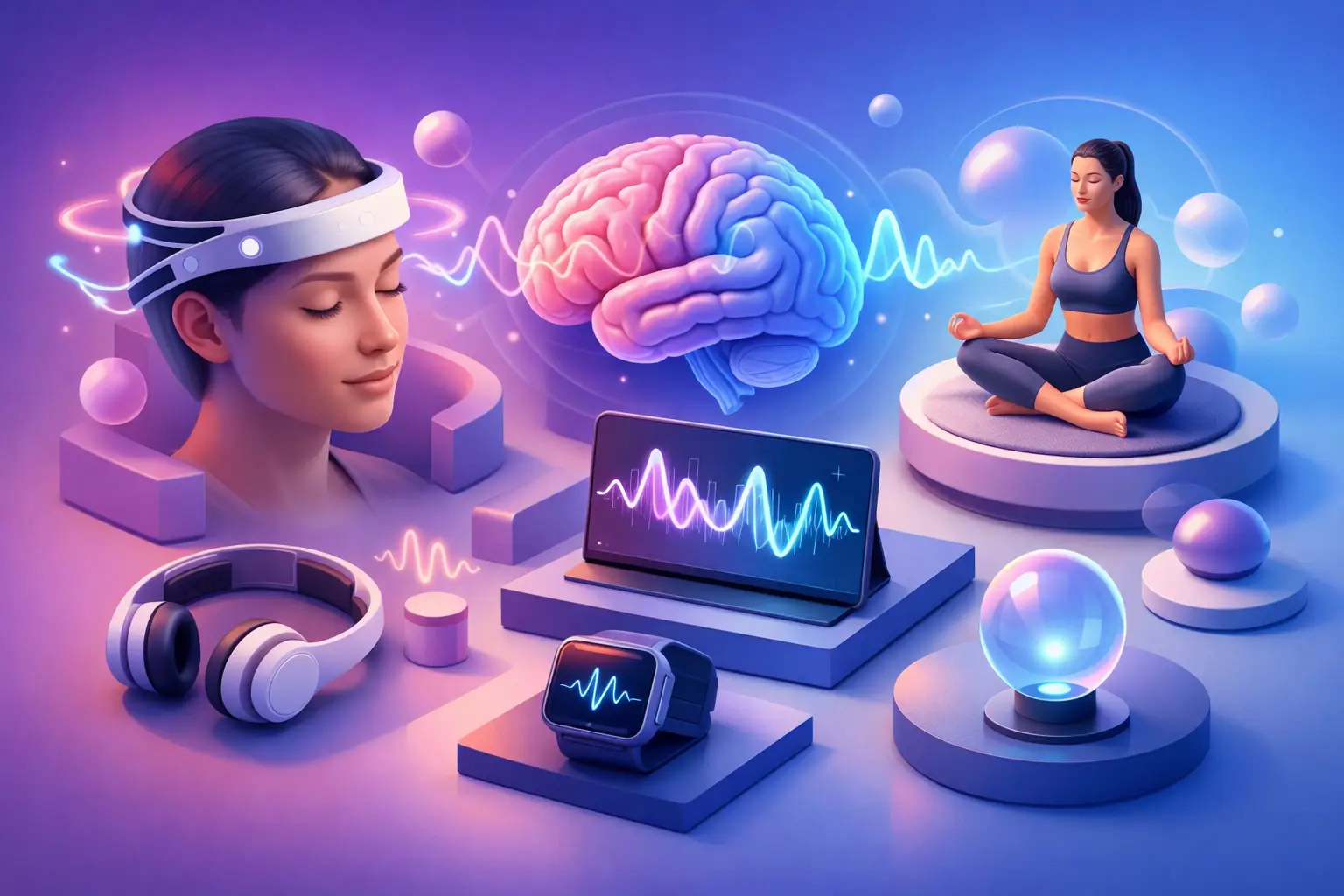
A lot of wellness products ask for more time, more effort, or more gear. That is exactly why brainwave technology wellness trends are getting real attention right now. People want tools that help them focus, calm down, sleep better, or reset mentally without turning it into a second job.
This shift matters because modern wellness is getting more selective. Users are no longer impressed by vague promises or bloadead routines. They want something they can use between meetings, before studying, after a stressful day, or during a low-energy stretch when their mind feels noisy and scattered. Brainwave-based audio fits that demand because it is simple, fast to use, and built around a specific outcome.
Why brainwave technology wellness trends are growing
The biggest driver is practical value. People are looking for non-invasive ways to support better internal states. They want support for concentration, emotional balance, sleep quality, and stress management without adding another complicated habit to their day.
That is where brainwave technology stands out. Instead of asking users to learn an entire system, it offers a direct input through sound. In many cases, that means audio experiences such as binaural beats, which are designed to support different mental states by delivering slightly different frequencies to each ear. For users, the appeal is obvious. Press play, use headphones, and match the session to the result you want.
Another reason this category is expanding is that wellness buyers have become more outcome-driven. They are less interested in broad lifestyle branding and more interested in tools with a clear purpose. A track for deep focus feels more useful than a generic promise of balance. A sleep-support session feels more concrete than a vague claim about self-care.
This does not mean everyone is using brainwave audio the same way. Some people use it for productivity. Others want emotional decompression. Others want support during meditation, journaling, reading, creative work, or winding down at night. The category is growing because it adapts to real life.
The move from passive wellness to active state control
One of the most important brainwave technology wellness trends is the move toward state control. People are not just consuming wellness content anymore. They are choosing tools based on the state they want to create.
That is a major change.
For years, wellness apps and products often centered on general relaxation. Now the demand is more precise. Users want focus at 9 a.m., calm at 3 p.m., and sleep support at 10 p.m. They want audio that works with the moment they are in, not just a one-size-fits-all experience.
This is why targeted sound libraries are becoming more attractive than broad meditation platforms for some users. Specificity feels more useful. If your mind is racing, you want a tool built for mental slowing. If you are trying to work, you want a tool built for sustained concentration. That level of intentionality is shaping the market.
It also fits the wider self-optimization space. Professionals, students, and entrepreneurs are already tracking habits, protecting energy, and trying to reduce mental friction. Brainwave audio enters that ecosystem as a performance-friendly wellness tool. It supports how people want to feel and function, not just how they want to relax.
Audio-first wellness is becoming more credible
Another clear trend is growing comfort with audio-first solutions. A few years ago, many consumers still treated sound-based wellness as fringe or overly experimental. That barrier is lower now.
Part of that comes from habit. People already use audio for sleep stories, guided meditation, productivity playlists, and nervous system support. Adding brainwave-based sound is not a dramatic leap. It feels like a next-step upgrade for users who want more than background noise.
Part of it also comes from better positioning. The strongest brands in this category do not oversell it as magic. They present it as a useful tool for shaping mental conditions. That framing works because it respects the user. People want support, not hype.
There is still a trade-off here. Audio wellness is accessible, but results can vary. Some users notice a strong difference quickly. Others need consistency, the right headphones, and the right use case before they feel the benefit. That does not weaken the trend. It simply means expectations matter. Brainwave technology works best when it is treated like a structured input, not a miracle shortcut.
The rise of focused-use binaural beats
Binaural beats sit at the center of many brainwave technology wellness trends because they match what today’s user wants: targeted support with low friction.
The value is not just that they are easy to use. It is that they can be organized around real goals. Focus. Calm. Emotional reset. Sleep. Mental clarity. Creative flow. That makes the experience feel actionable instead of abstract.
This is also why curated libraries are gaining traction. Users do not want to guess which track to use or sort through endless generic content. They want a system they can trust. A structured collection removes decision fatigue and makes the habit easier to maintain.
For a busy audience, that matters. If a tool takes too much explanation, many people drop it. If it fits into an existing routine, it has a better chance of sticking. That is one reason product-driven platforms like Hertzbox Pro have a strong position. A specialized binaural beat library gives users a practical way to match audio to need without overcomplicating the process.
What users actually want from this category
The market is maturing, and that means users are getting clearer about what they expect.
They want convenience, but not fluff. They want a wellness tool that feels modern and effective. They want support that fits into a commute, a work block, a study session, or a nighttime routine. Most of all, they want to feel a difference.
That demand is pushing the category in a stronger direction. The winning products are not trying to be everything. They are narrowing in on the outcomes people care about most. Better focus during demanding work. Less internal noise after stress. A smoother transition into sleep. A more centered baseline during emotionally heavy days.
This has also changed how people evaluate wellness tools. They are asking practical questions. How fast can I use this? Does it require effort? Can I repeat it consistently? Does it support the state I need right now?
Those questions favor brainwave-based audio when it is presented clearly and used intentionally.
Where brainwave technology wellness trends may go next
The next phase will likely be less about novelty and more about precision. That means better categorization, better session design, and better integration into daily routines.
Consumers are becoming more selective. They do not just want access to brainwave audio. They want the right session at the right time for the right outcome. That creates pressure for brands to be more organized, more specific, and more honest about use cases.
It also means the winners will probably be the brands that keep the experience simple. The market does not need more complexity. It needs better matching between user state and audio support.
At the same time, there is room for healthy skepticism. Brainwave wellness should not replace professional care when someone needs medical or mental health treatment. It is a support tool, not a cure-all. For everyday focus, stress regulation, and personal optimization, though, it fits a growing need extremely well.
That is the real signal behind these trends. People want more control over how they feel and perform, and they want that control in a form that is accessible, repeatable, and realistic.
Brainwave technology is gaining ground because it meets people where they actually live - in the middle of deadlines, stress, ambition, and the constant need to reset fast. If a wellness tool can help you think clearer, settle faster, and use your mind with more intention, it stops being a trend and starts becoming part of how you operate.