
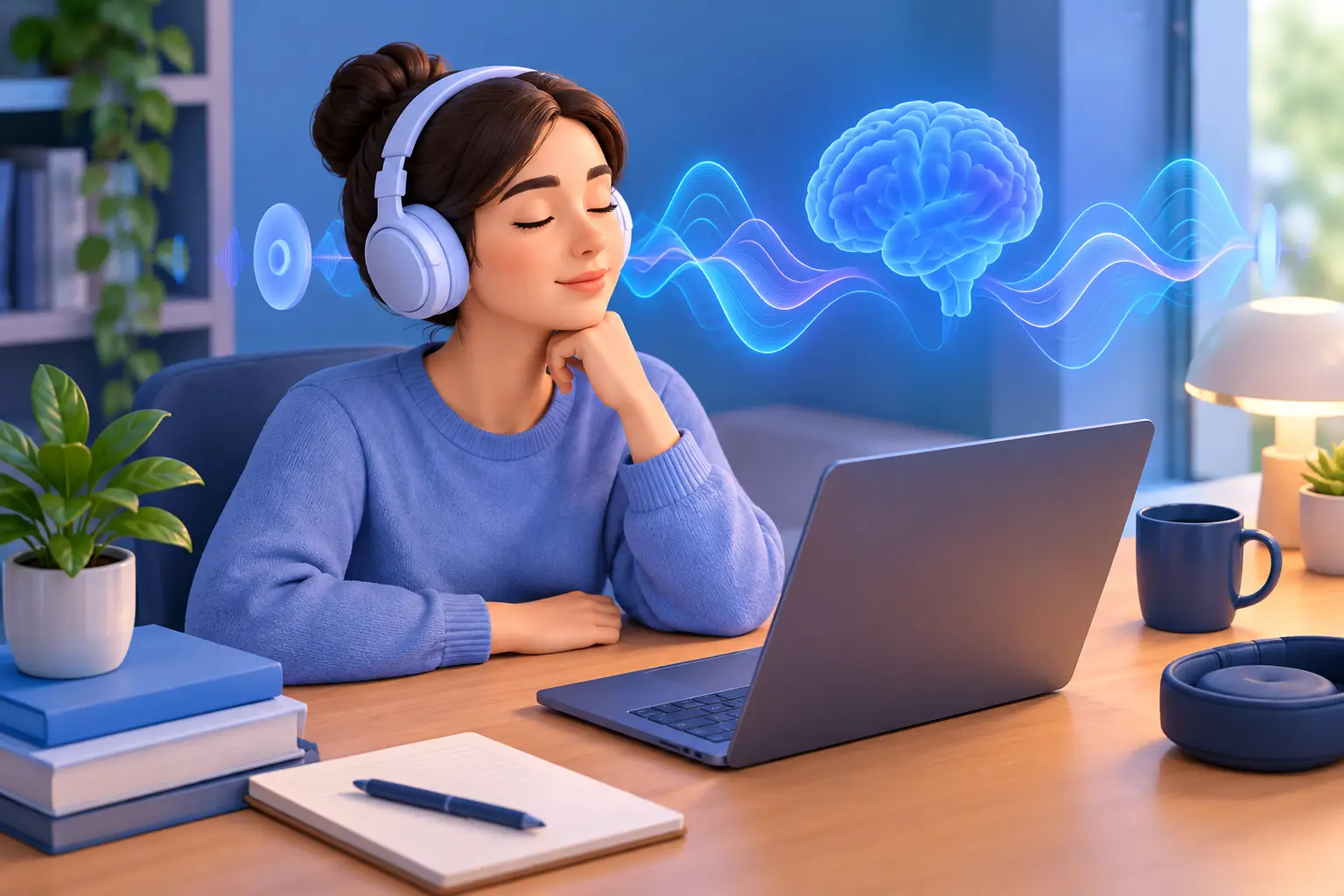
A scattered mind rarely needs another complicated system. It needs the right cue at the right moment. This binaural beat library review looks at what a targeted collection of 91 tracks can add to a real routine: a faster way to shift into focus, decompress after pressure, or create space before sleep.
The appeal is straightforward. Instead of scrolling through broad meditation content and hoping something fits your mood, you choose an audio experience built around the state you want to support. That can be useful for professionals trying to protect deep-work time, students facing a long study block, and anyone who wants a calmer transition out of a demanding day.
What a Binaural Beat Library Is Actually For
Binaural beats are created when each ear receives a slightly different tone through headphones. Your brain perceives the difference between those tones as a rhythmic pulse. People commonly use these tracks as an audio environment for concentration, relaxation, meditation, or sleep preparation.
That last phrase matters: audio environment. Binaural beats are not a replacement for sleep, therapy, medical care, or the work of changing stressful circumstances. They are a practical support tool. When a track is matched to a clear intention and used consistently, it can help make a desired routine feel easier to enter.
A strong library does more than hand you a pile of ambient sounds. It gives you options for different moments. The mental state you need before a presentation is not the same state you want at 10:30 p.m. when your body is tired but your thoughts are still moving at full speed. A large, organized catalog gives you room to be specific.
Binaural Beat Library Review: What Makes 91 Tracks Useful
The value of a 91-track collection is not simply the number. More tracks only help if they reduce friction rather than create more decisions. The best use of a library is to build a small personal rotation: a few tracks for focused work, one or two for decompression, and several reserved for sleep or quiet reflection.
That is where a specialized collection has an advantage over a general wellness app. General platforms often ask you to choose among talks, breathwork, music, stories, and courses. Those can all be valuable, but they can also turn a two-minute reset into a fifteen-minute search. A binaural beat library stays focused on one job: helping you set the conditions for a chosen internal state.
For a user who wants immediate, repeatable access to frequency-based audio, the focused format is a feature. There is no steep learning curve. Put on stereo headphones, select a track aligned with your next task, and let the sound become part of the ritual.
The trade-off is equally clear. If you want coaching, guided meditations, community challenges, or detailed mental health education, an audio-only collection will not provide all of that. It is designed for people who prefer a direct tool over a content-heavy platform.
Where a Targeted Audio Collection Can Fit
The strongest results often come from attaching a track to an existing behavior. Do not wait until you feel completely overwhelmed to try it. Use the audio as the starting bell for a routine you already want to strengthen.
For concentrated work
Use a focus-oriented track at the beginning of a defined work block. Close unnecessary tabs, silence notifications, put your phone out of reach, and give yourself one clear objective. The track does not do the work for you. It can make the transition away from reactive attention feel more intentional.
This approach is especially useful when your brain associates the same audio with the same type of effort. Over time, pressing play can become a cue that says, “This is the part of the day when I finish what matters.”
For stress after a demanding day
Stress does not always disappear the second work ends. Many people carry urgency from meetings, deadlines, and screens into dinner, family time, or bed. A calming track can create a deliberate buffer between performance mode and personal time.
Try listening in a low-stimulation setting for ten to twenty minutes. Avoid pairing it with email, social media, or another source of mental noise. The goal is not to force relaxation. It is to stop feeding the state you are trying to leave.
For studying and mental endurance
Students and knowledge workers often mistake longer hours for better learning. A better approach is to create shorter periods of high-quality attention with real breaks between them. Use a study track during reading, practice problems, writing, or review sessions, then step away before your concentration collapses.
If you notice the audio becomes distracting, lower the volume or switch tracks. The right session should support your work without demanding your attention every few seconds.
For an evening wind-down
Sleep-focused audio is most useful when it supports a larger bedtime pattern. Dim the lights, stop working, keep the phone away from the pillow, and give your nervous system a repeatable signal that the day is over. Headphones may be uncomfortable for sleeping, so use them during the wind-down period rather than all night if that feels better.
How to Use a Binaural Beat Library Without Overthinking It
Start with the outcome, not the frequency label. Most users do not need to become experts in audio theory to benefit from a simple routine. Ask one question: what do I need more of right now - focus, calm, emotional space, or a cleaner transition to rest?
Then test one track at a time for several sessions. Constantly switching makes it hard to tell what is actually helping. Keep the volume comfortable and use stereo headphones, since binaural beats depend on each ear receiving a separate tone.
Pay attention to practical signals. Did you start your task faster? Did you stay with it longer before checking your phone? Did your evening feel less mentally crowded? These observations are more useful than expecting a dramatic, instant shift.
It also helps to set a realistic session length. A fifteen-minute reset can be enough before a meeting or after a stressful commute. A longer track may suit a study block or meditation practice. Match the listening time to the job rather than assuming longer is always better.
Who Will Get the Most From This Format
A dedicated binaural beat collection works best for people who value convenience and repetition. If you already know that music, white noise, or ambient sound helps you settle into work, focused frequency-based audio may be a natural next step.
It can also work well for people who are tired of collecting productivity methods without using them. You do not need another complex protocol. You need a low-effort trigger that helps you begin. Hertzbox Pro is built around that idea, offering a structured collection for users who want targeted support for concentration, calm, and mental reset.
The format may be less appealing if you dislike wearing headphones, need spoken instruction to stay engaged, or expect audio alone to resolve severe anxiety, insomnia, or attention difficulties. In those cases, treat binaural beats as one layer of support and seek qualified help when symptoms are persistent, intense, or disruptive to daily life.
People with a history of seizures, sound sensitivity, or any condition that makes audio stimulation uncomfortable should be especially cautious and consult an appropriate healthcare professional if unsure. A wellness tool should feel supportive, not unpleasant or overwhelming.
The Bottom Line on a Binaural Beat Library
A 91-track library earns its place when it helps you make fewer decisions and take more useful action. Its power is in the repeatable moment: headphones on, distractions down, one chosen state supported by sound.
Do not measure the experience by whether every session feels dramatic. Measure it by whether you return to the task, the pause, or the bedtime routine with less resistance. The right track can become a small but meaningful line between mental friction and forward movement.